

Edible storage and household safety · Adults 21+
A practical storage routine for homes with children, pets or visiting families.
How should you store edibles safely?
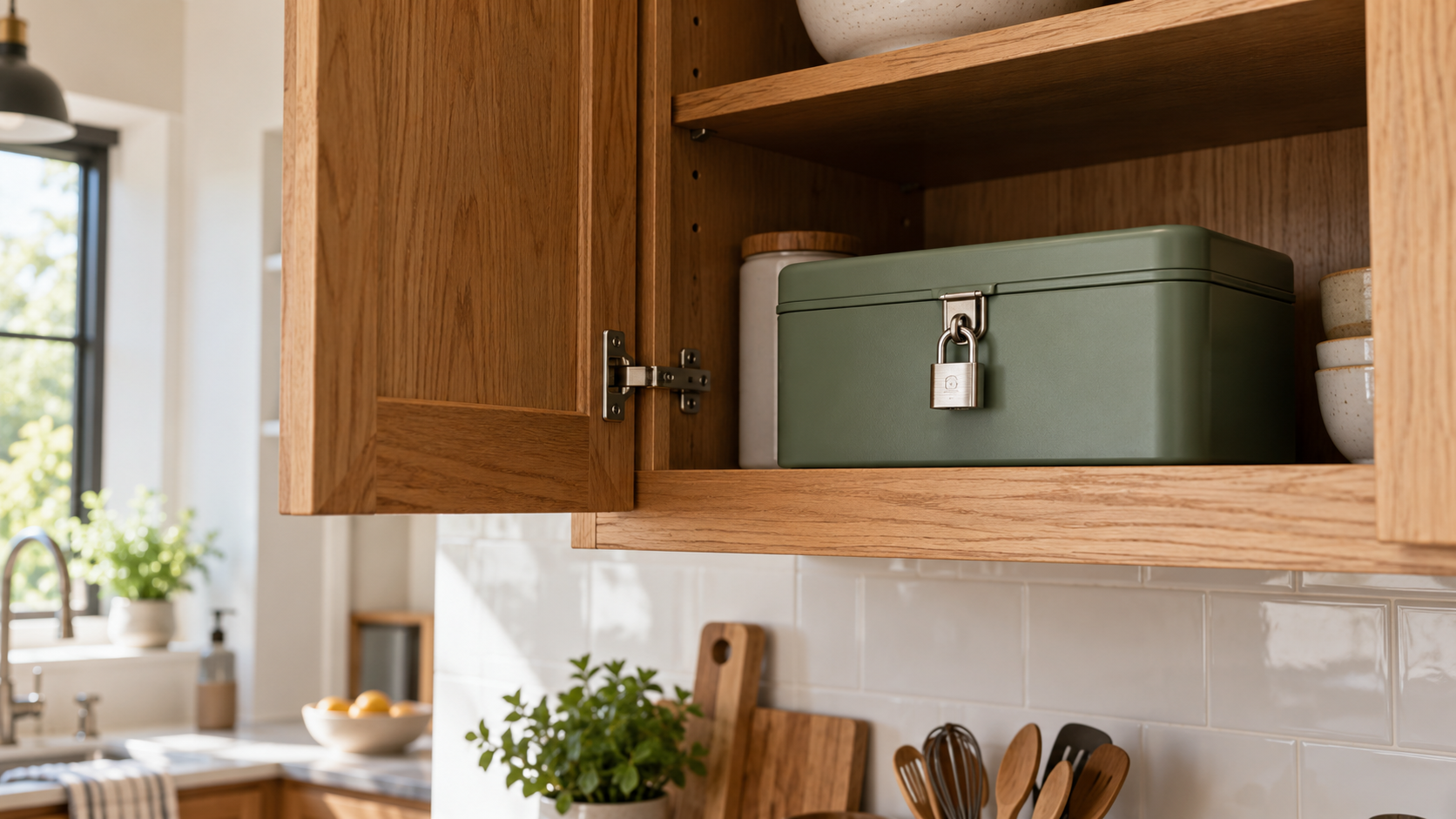
Store edibles in their original, clearly identified packaging inside a locked container or cabinet, out of sight and reach of children and pets. Keep them separate from ordinary snacks and drinks. Follow the product’s refrigeration directions, and secure refrigerated products too. A child-resistant package adds protection, but it does not replace locked storage.
Keep the package, ingredients and product details together.
Close the package and reengage the storage lock every time.
Avoid snack drawers, candy bowls and shared drink coolers.
Food-storage directions and access protection both matter.
The CDC recommends locked storage out of sight and reach of children and pets. Follow the food’s storage directions as well: a locked cupboard cannot replace refrigeration when the label requires it.
Related guide: For shelf life, spoilage and potency questions, read do THC gummies expire?
Prepared for Mary Jane’s Bakery Co Editorial Team · Updated October 19, 2026. General prevention information based on linked public guidance; not medically or veterinary reviewed.
1. Set up secure edible storage
Choose storage by the situation
| Situation | Practical setup | Common gap |
|---|---|---|
| Shelf-stable gummies | Original closed package in a locked cabinet or box; follow label conditions. | A high shelf without a lock. |
| Product marked “refrigerate” | Keep cold as directed and restrict access using storage suitable for a refrigerator. | A clear snack tub beside ordinary food. |
| Guest brings edibles | Agree on secure storage as soon as the guest arrives. | A purse or backpack left on a chair. |
| Halloween or another gathering | Check food areas and secure all infused items before guests arrive. | Similar wrappers or loose pieces near shared treats. |
Choose one designated place for cannabis products and make it easy for adults to use correctly. Keep retail edibles in their original packaging so the product name, ingredients and warnings remain available. Place the closed package inside a locked box or cabinet, separate from everyday food.
Health Canada’s storage guidance supports original packaging, separation and locked storage.
- Keep the key or code under adult control.
- Check that the lid, zipper or cap is fully closed before locking the outer storage.
- Return the package immediately after handling it.
- Label homemade infused foods clearly and secure them separately from ordinary food. If the cannabinoid amount is unknown, mark it as unknown rather than guessing.
A practical example: if an adult takes a pouch from a bedroom cabinet, the routine is finished only when the pouch is closed and back behind the lock. Leaving it on a bedside table creates a new access opportunity.
2. Child-resistant, airtight and smell-proof mean different things
“Child-resistant” does not mean impossible for a child to open. The U.S. Consumer Product Safety Commission explains that safety devices must be correctly installed and reengaged, and that even child-resistant packages should be locked away.
| Feature | What it addresses | What not to assume |
|---|---|---|
| Child-resistant closure | Resistance to opening by young children when used correctly. | That every child is unable to open it. |
| Airtight or smell-proof claim | Air or odor containment. | That it establishes child resistance or a secure lock. |
| Tamper-evident seal | Evidence that a package has been opened. | That it prevents access after opening. |
| Locked outer storage | An additional barrier to access. | That an unlocked lid, available key or damaged latch remains protective. |
Check the actual closure and its instructions. An ordinary zipper pouch or decorative glass jar should not be treated as a child-resistant container merely because it closes.
3. Store refrigerated edibles securely, too
Follow the product label. Edible formats and ingredients differ, so a gummy, infused dessert and opened beverage do not share one universal storage rule. The FDA recommends keeping refrigerators at 40°F (4°C) or below and checking food-storage directions.
If refrigeration is required, use an access-controlled arrangement suitable for cold storage while preserving the original package. Do not put a perishable product in a room-temperature lockbox just to keep it locked. Avoid crowding the refrigerator in a way that restricts cold-air circulation.
Before choosing a refrigerator storage box
- Check intended use: Ask the manufacturer whether the box and lock are suitable for refrigerator temperatures and moisture.
- Keep the original package: Choose enough space for the sealed pouch, bottle or food container with its label intact.
- Check the closure: Follow its instructions and confirm it closes fully. Replace a damaged or unreliable latch.
- Leave room for cold air: Avoid tightly packing the refrigerator around the box. Check the refrigerator with an appliance thermometer.
- Control access: Keep the key or combination with a responsible adult, not beside the box.
These checks help you choose a workable setup; they do not certify a container as childproof. If you cannot meet the product’s temperature directions and prevent access, arrange a suitable setup before bringing it into the home.
Two checks must pass: Is the food stored at the required temperature, and is it inaccessible to children and pets? A refrigerator door alone is not the same as a storage lock.
For beverages, Poison Control recommends keeping cannabis drinks in their original containers. Do not pour them into a shared juice pitcher. See our separate guide to THC drink refrigeration for format-specific questions.
4. Prepare for visitors, caregivers and Halloween
Give visitors a clear storage plan before bags end up beside the couch. Ask adults to secure edibles they bring rather than assuming a purse, jacket pocket or overnight bag is inaccessible. Jackson County’s prevention guidance includes asking house guests to follow safe-storage practices.
Before a gathering, check counters, bedside tables, shared refrigerators and bags within reach. If an infused item is unidentified, keep it away from food being served; do not ask someone to taste it to find out what it is.
Include grandparents, babysitters and other caregivers
Ask about storage in any home where a child spends time, including a grandparent’s home. Explain the routine to babysitters and visiting adults, and make emergency contact details easy to find. A simple question is: “Are any cannabis products here, and how are they kept locked away?”
Nationwide Children’s Hospital recommends discussing edible safety with caregivers and avoiding use in front of children. Do not supervise children while impaired; arrange for a sober, capable adult to be responsible for them.
Halloween makes separation especially useful because ordinary treats may already be everywhere. The American Academy of Pediatrics’ Halloween guidance says deliberate placement of drug-laced candy in trick-or-treat baskets is rare, while look-alike packaging can cause confusion. Check treats carefully and keep infused products away from the food being shared.
The Washington Poison Center advises keeping edibles locked up and away from Halloween candy. Apply that separation before filling treat bowls and again during cleanup.
5. Include pets, dropped pieces and waste
Check beyond the main container: a dropped gummy, a torn pouch or food residue in an accessible bin can bypass an otherwise good storage routine. Pick up dropped pieces promptly and keep product waste inaccessible while arranging disposal under applicable local guidance.
The FDA lists marijuana, chocolate and xylitol among potential pet hazards. An edible can therefore present more than one concern. Check its ingredient list instead of assuming THC is the only relevant ingredient.
Keep the packaging for the veterinarian if exposure occurs. Do not estimate safety from the piece’s size, and do not assume packaging designed to resist a child will withstand chewing by an animal.
6. What to do if a child or pet may have eaten an edible
For a child
Call U.S. Poison Control at 1-800-222-1222 immediately. Poison Control advises calling even if symptoms have not appeared, because effects can be delayed. Do not wait for a child to look unwell.
Call 911 immediately if the child collapses, has a seizure, struggles to breathe or cannot be awakened. Poison Control’s first-aid guidance also says not to induce vomiting. Follow the specialist’s instructions.
For a pet
Call your veterinarian, an emergency animal hospital or an animal poison control service promptly. The FDA’s pet emergency guidance lists ASPCA Animal Poison Control at 1-888-426-4435 and Pet Poison Helpline at 1-855-764-7661; these services charge fees.
Do not try to make a pet vomit or give home remedies unless a veterinarian or animal poison specialist directs you. The ASPCA warns that attempts to induce vomiting at home can cause harm. Call for instructions specific to the animal and exposure.
While getting help: Have the package, ingredients, possible amount missing and approximate exposure time ready. Tell the professional what you know and what is uncertain. Gathering details must not delay the call.
7. A household storage checklist
Use this practical check after unpacking, after handling an edible and before visitors arrive:
- The product is identifiable and the package is closed.
- The outer storage is locked, with the key or code controlled by an adult.
- Ordinary food, pet treats and infused products are separate.
- Anything requiring refrigeration remains appropriately chilled.
- No loose pieces, opened drinks or accessible product waste remain.
- Guests and caregivers know the storage routine and who is supervising children.
- Poison Control and veterinary contact details are easy for adults to find.
Recheck the setup when routines, visitors or storage locations change. A lock only adds protection when it is closed and used correctly.
8. Storage questions to ask in Miami
Before bringing an edible home, ask where the package explains storage before and after opening, how its closure works, and where to find ingredients and batch details. If directions are missing or contradictory, ask for clarification instead of guessing.
For an item obtained from Mary Jane’s Bakery Co., use our product and packaging contact page for those questions. Our Miami location details are available if you need to identify the store. Retail staff are not a substitute for Poison Control or a veterinarian.
9. Sources and what they support
| Source | Used for |
|---|---|
| CDC; Health Canada | Locked storage, separation, original packaging and preventing access. |
| U.S. Consumer Product Safety Commission | Limits of child-resistant packaging and correct use of locks. |
| FDA food-storage guidance | Label instructions and refrigeration temperature. |
| AAP; Washington Poison Center; Jackson County | Halloween context, guests and household separation. |
| National Capital Poison Center | Child exposure, delayed symptoms, first aid and beverage containers. |
| FDA animal-health guidance; ASPCA | Pet hazards, veterinary contacts and avoiding unsupervised home treatments. |
| Nationwide Children’s Hospital | Caregiver communication and child-safety precautions. |
Sources are linked beside the guidance they support. The household examples illustrate storage choices; they are not product tests.
10. Frequently asked questions
Is a high kitchen cupboard enough?
Height alone leaves an access gap. Use a locked storage area out of sight and reach, and keep edibles separate from normal food.
Can I use a smell-proof bag?
Odor containment does not establish child resistance. Check the closure and use locked outer storage; do not rely on the smell-proof claim.
Do all THC gummies need refrigeration?
No single rule fits every formulation. Follow the package directions. If cold storage is required, protect against access in the refrigerator too.
Should I wait for symptoms if my child may have eaten one?
No. Call U.S. Poison Control at 1-800-222-1222 immediately. Serious symptoms such as breathing trouble or inability to wake require 911.
Does this apply to CBD gummies?
CBD products also belong away from children. The CDC’s CBD guidance recommends child-resistant containers and storage out of children’s reach. Do not treat adult CBD gummies as ordinary candy.
11. Make storage part of the routine
Choose a location that meets the food’s storage directions, preserves its identity and restricts access. Then repeat the same close-and-lock check every time. The overlooked pouch, shared refrigerator shelf and visitor’s bag deserve attention alongside the main storage box.