

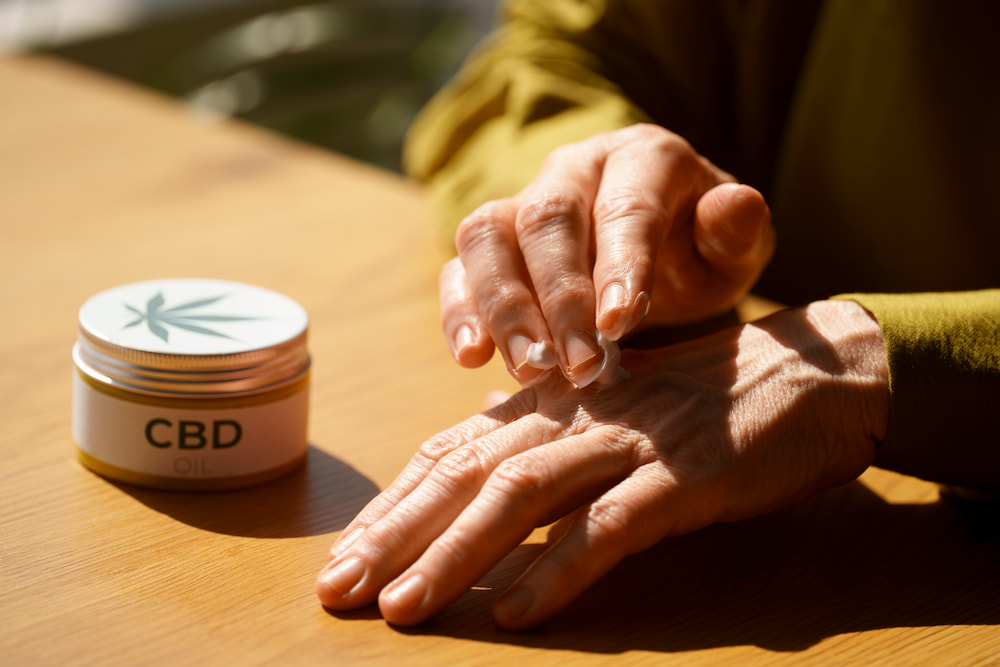
CBD for Skin Aging: Topicals, Fine Lines, Hydration & Skin Barrier Support
CBD skincare has become a bigger part of modern beauty, wellness, and body-care routines. A few years ago, many people searched for CBD anti-aging benefits because they wanted a simple answer: can CBD make skin look younger?
Today, the better question is more realistic:
Can CBD topicals support a skincare routine focused on hydration, comfort, fine lines, and healthier-looking skin?
That is the right way to look at it. CBD is not a magic wrinkle remover, and no cream can reverse aging overnight. But CBD creams, balms, body butters, and lotions may fit into a routine built around dry-feeling skin, daily comfort, moisture, and skin barrier support.
For adults shopping at Mary Jane’s Bakery Co., the goal is simple: choose CBD products with realistic expectations, clear product details, and safe, responsible use.
Quick Answer: Can CBD Help Aging Skin?
CBD topicals may help support a skincare or body-care routine by adding moisture, comfort, and antioxidant-focused plant ingredients to the skin. They may be useful for adults dealing with dry-feeling skin, tired-looking texture, or fine lines that look more noticeable when the skin is dehydrated.
CBD should not be treated as a guaranteed wrinkle treatment, collagen booster, sunscreen replacement, or medical solution. For visible skin aging, dermatologists still recommend starting with sunscreen, moisturizer, gentle cleansing, and consistent daily care.
Why the CBD Skincare Conversation Has Changed
Older CBD skincare content often used big promises like “reverse aging,” “remove wrinkles,” or “restore youthful skin.” That kind of wording may sound attractive, but it is not always the most trustworthy way to explain CBD.
Modern shoppers are searching with more practical intent. They want to know:
- Can CBD cream help dry-feeling skin?
- Is CBD good for fine lines or wrinkles?
- What is the difference between CBD cream, balm, lotion, and body butter?
- Can CBD support the skin barrier?
- How do I choose a CBD topical safely?
- Should I use CBD topical, CBD oil, or CBD edibles?
That is why the best way to understand this topic is through CBD skincare, CBD topicals, hydration, fine lines, skin barrier support, and product quality. This gives readers a more useful answer and avoids claims that sound too strong.
What Is CBD?
CBD stands for cannabidiol, a compound found in the cannabis plant. CBD is different from THC, the cannabinoid most associated with intoxication. CBD products can come in many forms, including creams, balms, lotions, oils, tinctures, gummies, capsules, and cosmetics.
The CDC explains that CBD is used in many consumer products, including oils, lotions, capsules, foods, and cosmetics. The CDC also notes that scientists are still learning how CBD affects the body and that CBD products are not risk-free.
That does not mean adults cannot explore CBD. It means CBD shoppers should look for clear labels, product transparency, responsible use directions, and realistic expectations.
How Skin Aging Usually Shows Up
Skin changes naturally over time. Some changes come from age, while others come from sun exposure, dryness, stress, pollution, lifestyle habits, and genetics.
Common visible signs of skin aging can include:
- Fine lines
- Wrinkles
- Dry or rough-looking texture
- Dull-looking skin
- Loss of firmness
- Uneven tone
- Skin that feels more sensitive than before
The American Academy of Dermatology says sunscreen and moisturizer are two of the most effective anti-aging products. That matters because CBD topicals should not replace the basics. A CBD cream may be an added body-care product, but sunscreen and moisturizer are still the foundation of a smart skincare routine.
Where CBD May Fit Into a Skin Aging Routine
CBD is interesting in skincare because researchers have studied cannabinoids for antioxidant, anti-inflammatory, moisturizing, and skin-related properties. This does not mean CBD is a guaranteed anti-aging treatment. It means CBD may be a useful ingredient in certain topical formulas when paired with good skincare habits.
A simple way to think about it:
CBD topicals may support skin comfort, moisture, and a healthier-looking appearance, but they should not be promoted as a cure, wrinkle remover, or medical treatment.
For fine lines, hydration matters a lot. When skin feels dry, fine lines can look more visible. A rich cream, balm, or body butter may help the skin feel softer and look smoother temporarily. That effect often comes from the full formula, not only the CBD. Ingredients like shea butter, aloe, coconut oil, botanical oils, menthol, or other moisturizers can change how a product feels on the skin.
If your main interest is skin or body-care use, start with the CBD Topicals collection instead of choosing a tincture or edible first.
CBD Cream vs CBD Balm vs CBD Body Butter vs CBD Roll-On
One reason top-ranking CBD topical pages perform well is that they help shoppers compare product types. Not every CBD topical is used the same way. Texture, strength, and formula all matter.
| CBD Product Type | Best For | What to Know |
|---|---|---|
| CBD Cream | Everyday body-care use, dry-feeling skin, larger areas | Creams are usually easier to spread and can feel lighter than balms. |
| CBD Balm | Targeted use, thicker texture, areas that need a richer feel | Balms are often heavier and may stay on the skin longer. |
| CBD Body Butter | Dry-feeling skin, nighttime body care, deeper moisture feel | Body butter usually feels richer and may be better for dry areas like elbows, knees, hands, and feet. |
| CBD Lotion | Light daily moisture, quick application | Lotions are usually thinner and may absorb faster. |
| CBD Roll-On | Quick, targeted application without using hands | Roll-ons are convenient for adults who want a mess-free option. |
For skincare-focused use, creams and body butters are often easier to work into a daily routine. For targeted body-care use, balms and roll-ons may be more convenient.
CBD Topicals vs CBD Oil: Which One Makes More Sense for Skin?
CBD topicals and CBD oils are not the same product type.
A CBD topical is applied directly to the skin. This includes creams, balms, lotions, salves, body butters, and roll-ons. If your goal is skin feel, body-care comfort, or moisture, a topical usually makes the most sense.
A CBD oil or tincture is usually used by mouth or under the tongue, depending on product directions. That makes it a different category from CBD skincare products.
Mary Jane’s Bakery Co. carries both CBD Topicals and CBD Oil Tinctures. If your question is about skin, texture, dryness, or topical use, start with topicals first.
Best CBD Topical Choice by Skin Goal
Choosing the right CBD topical depends on what you want from the product. Here is a simple guide.
For Dry-Feeling Skin
Look for a CBD cream, lotion, or body butter with moisturizing base ingredients. CBD may be part of the formula, but the full ingredient list matters. Shea butter, aloe, coconut oil, and other moisturizing ingredients can affect how soft or hydrated the skin feels.
For Fine Lines That Look Worse When Skin Is Dry
Fine lines often appear more noticeable when the skin lacks moisture. A rich CBD cream or body butter may help skin look smoother temporarily by supporting moisture. This is different from saying CBD removes wrinkles. The safer and more accurate point is that better hydration can improve the look and feel of dry skin.
For Skin Barrier Support
The skin barrier helps hold moisture in and protect the skin from outside stressors. If your skin feels dry, rough, or easily irritated, avoid harsh formulas and keep your routine simple. A CBD topical with gentle moisturizing ingredients may fit into a barrier-support routine, but sensitive skin should always be patch tested first.
For Targeted Body-Care Use
If you want something for a specific area, a balm or roll-on may be easier than a lotion. These products can be applied exactly where you want them without covering a large area.
For Stronger CBD Topical Preference
Some adults prefer stronger CBD creams because they want a more concentrated topical product. Strength should be easy to understand from the product label. Mary Jane’s Bakery Co. carries different topical strengths, including options such as 1,000MG Full Spectrum CBD Topical Relief Cream, 5,000MG Full Spectrum CBD Topical Relief Cream, and 10,000MG Maximum Strength Full Spectrum CBD Topical Cream.
What CBD Skincare May Support
1. Moisture and Skin Softness
CBD topicals are often built with moisturizing ingredients. For adults with dry-feeling skin, a cream, balm, or body butter may help the skin feel softer and more comfortable. The best results usually come from the full formula, not CBD alone.
2. A Calmer-Looking Appearance
CBD is often used in skincare because of its connection to comfort-focused formulas. Some adults choose CBD topicals when they want skin to feel calmer or less stressed. Still, CBD products should not be used as a replacement for medical care or dermatologist-recommended treatment.
3. Skin Barrier Support
A gentle, moisturizing topical routine can help support the skin barrier. CBD may be one ingredient in that routine, especially when the product also contains skin-friendly moisturizers. If a product stings, burns, or causes irritation, stop using it.
4. A Simple Body-Care Habit
CBD topicals are easy to understand. Apply the product to the skin as directed, let it absorb, and use it consistently if it works well for your skin. This makes CBD creams and balms appealing for adults who want a simple body-care product without a complicated routine.
For more product-specific guidance, you can also read Mary Jane’s guide to CBD body cream.
What CBD Skincare Should Not Promise
This is where many CBD skincare articles go too far. A trustworthy CBD skincare guide should not promise that CBD will:
- Remove wrinkles
- Reverse aging
- Repair sun damage
- Cure skin conditions
- Replace sunscreen
- Guarantee collagen production
- Treat acne, eczema, psoriasis, or other skin conditions
The FDA says there are still unanswered questions about the science, safety, and quality of CBD products. The FDA has approved one prescription CBD drug for certain seizure disorders, but that does not mean regular consumer CBD creams, gummies, oils, or cosmetics are FDA-approved treatments.
That does not make every CBD topical a bad product. It simply means shoppers should avoid miracle claims and focus on product quality, ingredients, testing, and realistic use.
CBD, Sunscreen, and Moisturizer: What Matters Most?
If your goal is healthier-looking skin as you age, start with the basics first.
The American Academy of Dermatology recommends sunscreen and moisturizer as the foundation of an anti-aging routine. When choosing sunscreen, AAD recommends broad-spectrum protection, SPF 30 or higher, and water resistance.
A simple routine may look like this:
- Cleanse gently.
- Apply moisturizer suited to your skin type.
- Use broad-spectrum SPF 30+ sunscreen during the day.
- Add CBD topical products where they make sense for body care, dry-feeling skin, or comfort-focused use.
- Talk with a dermatologist if you have ongoing irritation, severe dryness, rashes, or changing spots on your skin.
CBD can be an added product in the routine, but sunscreen and moisturizer are still the foundation.
CBD Topical Buying Checklist
Before buying a CBD topical, do not only look at the front label. A better product decision comes from checking the details.
1. Check the CBD Type
CBD products may be full spectrum, broad spectrum, or isolate. Full spectrum products can contain multiple hemp compounds and legally allowed trace amounts of THC, depending on the product. Broad spectrum products usually include multiple hemp compounds but are generally made without THC. CBD isolate is CBD by itself.
If you are sensitive to THC, have workplace drug testing concerns, or simply want to avoid THC, read the product details carefully.
2. Check the Strength
CBD topical strength can vary widely. Some adults prefer a lower-strength cream for casual daily use, while others choose stronger topical options. A good product should make the strength easy to understand.
3. Check the Full Ingredient List
The full formula matters. CBD topicals may include shea butter, aloe, coconut oil, menthol, fragrance, essential oils, botanicals, or other active-feeling ingredients. Some ingredients feel great for one person but may bother someone else’s skin.
If you have sensitive skin, fragrance sensitivity, or a history of irritation, patch test first.
4. Check Lab Testing or COA Details
Look for lab testing or a certificate of analysis when available. A COA can help confirm cannabinoid content and whether the product matches what the label says. Product transparency matters because CBD strength, THC content, and ingredient quality can vary from brand to brand.
5. Check Whether It Is Made for Face or Body
Not every CBD topical is designed for facial use. Some creams and balms are made for body care. If you want to use CBD on your face, choose a product that clearly fits facial skincare or follow label directions carefully.
6. Patch Test First
Apply a small amount to a small area of skin and wait to see how your skin responds. If you notice burning, itching, redness, or discomfort, stop using the product.
Who Should Be More Careful With CBD Products?
Some adults should be especially careful with CBD products. The CDC and FDA both warn that CBD can have side effects and may interact with medications. People who are pregnant, breastfeeding, taking prescription medications, or managing a health condition should speak with a healthcare professional before using CBD products.
For topical use, skin condition matters too. If you have broken skin, an unexplained rash, severe irritation, or a diagnosed skin condition, speak with a dermatologist before adding new active products.
Why Mary Jane’s Bakery Co. Is a Helpful Starting Point
Mary Jane’s Bakery Co. gives adults a simple way to compare CBD products, including topicals, tinctures, edibles, flower, vapes, and more. For skin and body-care questions, the best starting point is the CBD Topicals collection, because creams, body butters, and balms are the products most directly connected to skincare and topical use.
Adults can also explore the main CBD Products category to compare topicals with oils, gummies, hemp flower, vapes, and drinks. Mary Jane’s Bakery Co. serves Miami shoppers locally and also ships across the U.S. where permitted by law.
Final Takeaway: CBD Skincare Works Best With Honest Expectations
CBD skincare is still a strong topic, but it works best when explained honestly. CBD topicals should not be promoted as wrinkle removers, collagen boosters, or anti-aging cures. A better way to understand them is as comfort-focused body-care products that may support moisture, softness, and a healthier-looking skin routine.
If fine lines, dryness, or dull-looking skin are your concern, start with proven basics: moisturizer, sunscreen, gentle cleansing, and realistic expectations. Then, if you want to explore hemp-based body care, a CBD cream, balm, lotion, or body butter may be worth considering.
To compare options, visit the CBD Topicals at Mary Jane’s Bakery Co. and review product strength, ingredients, and lab details before choosing.
Disclaimer: This content is for general educational purposes only and is not medical advice. CBD products are not intended to diagnose, treat, cure, or prevent any disease. Talk with a qualified healthcare professional if you have medical concerns, take medications, are pregnant or breastfeeding, or have sensitive or irritated skin.
FAQ: CBD for Skin Aging and Topicals
Can CBD cream remove wrinkles?
No. CBD cream should not be expected to remove wrinkles. A CBD topical may help skin feel moisturized or more comfortable depending on the formula, but results vary. Sunscreen and moisturizer remain the strongest everyday basics for visible aging concerns.
Is CBD good for dry skin?
CBD topicals may be useful for dry-feeling skin when the formula includes moisturizing ingredients. The full product matters, including the base oils, butters, and added skincare ingredients.
Can CBD help with fine lines?
CBD should not be promoted as a guaranteed fine-line treatment. However, a moisturizing CBD topical may help dry skin look smoother temporarily because hydrated skin can make fine lines appear less noticeable.
Can I use CBD topical on my face?
Only use a CBD topical on your face if the product is made for facial use or the label allows it. Many CBD creams are designed for body use. Patch test first, avoid the eye area, and stop use if irritation happens.
Does CBD topical get you high?
CBD is different from THC. CBD topicals are generally used externally and are not chosen for an intoxicating effect. Full spectrum products may contain trace THC, so always review product details and lab testing when available.
Should CBD replace sunscreen?
No. CBD should not replace sunscreen. Dermatologists recommend sunscreen as one of the most important steps for protecting against premature skin aging caused by sun exposure.
What should I check before buying CBD cream?
Check the CBD type, strength, full ingredient list, lab testing or COA details, THC content, and whether the product is made for face or body use.
Where can I buy CBD topicals from Mary Jane’s Bakery Co.?
You can shop CBD creams, body butters, and topical options through the Mary Jane’s Bakery Co. CBD Topicals collection.