

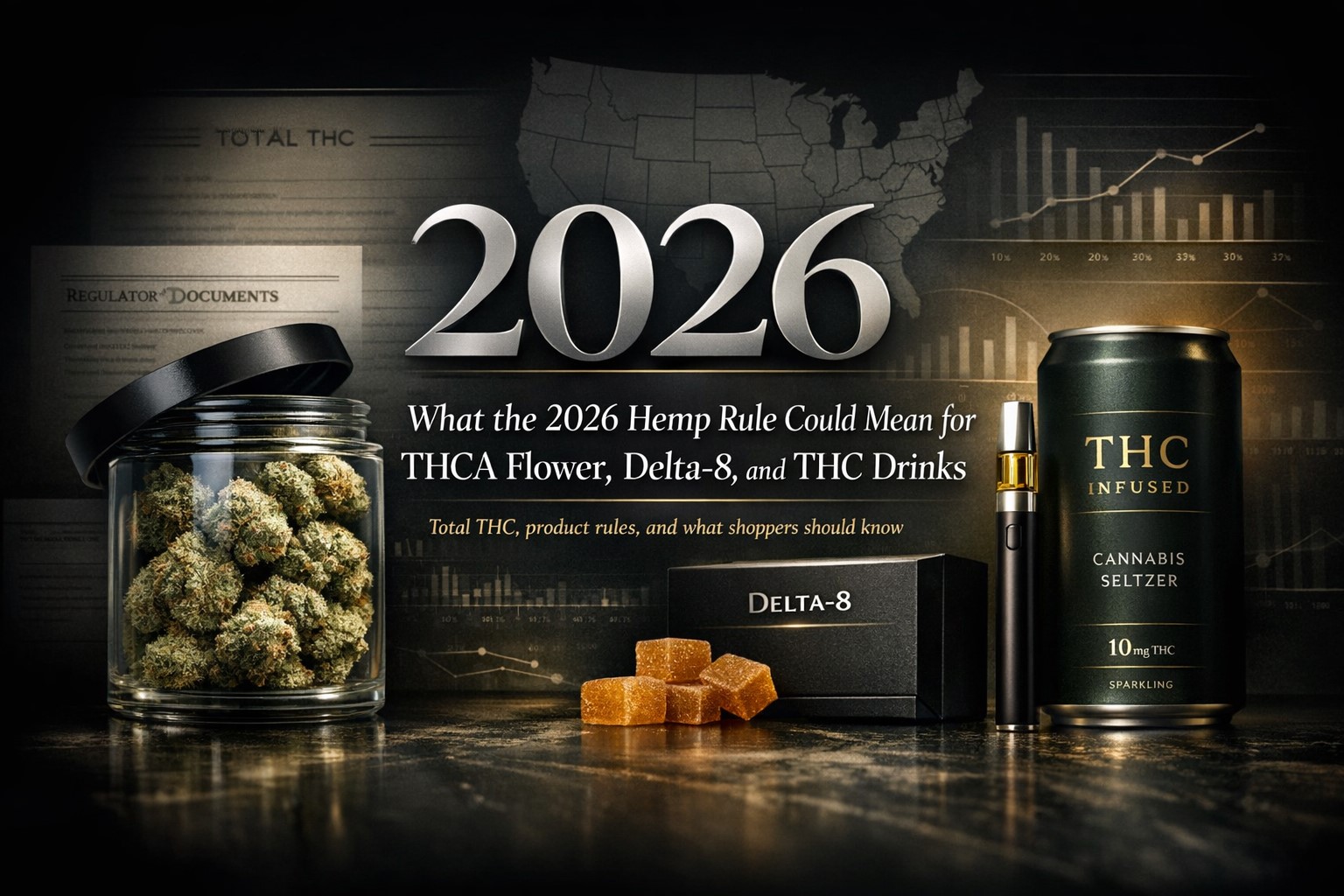
Quick answer (start here):
- THCA flower is under pressure because THCA now matters much more in the total THC conversation.
- Delta-8 is under pressure because intoxicating hemp products remain one of the biggest targets of tighter hemp rules.
- THC drinks are especially exposed because shoppers think in servings, but rules can focus on the full can or bottle.
- The key federal date is late 2026, but the market may still feel messy before then because states, brands, and stores do not all move at the same speed.
- The smartest move is careful shopping, clear COA checks, and watching both federal and state updates before you buy.
For the fastest route through this article, jump to the timeline, the comparison chart, or the shopping checklist.
Shipping + legality note (nationwide):
Mary Jane’s Bakery Co. ships across the United States where legal. Some products may have state restrictions depending on local rules. You can review notices during checkout and browse currently available options on the Shop page.
Table of contents
- Why this topic matters in 2026
- Timeline: what changes now vs later
- Quick comparison chart: THCA flower vs Delta-8 vs THC drinks
- What changed in plain English
- What this could mean for THCA flower
- What this could mean for Delta-8
- What this could mean for THC drinks
- Why state rules may still feel different
- What shoppers should check before buying
- Mary Jane pages worth reading next
- FAQ
1) Why This Topic Matters in 2026
A lot of hemp shoppers still think in the older way: check Delta-9, read the front label, and decide from there. In 2026, that shortcut is not enough anymore. The current conversation is much more focused on total THC, finished-product limits, and whether categories like THCA flower, Delta-8, and drinks still fit inside the hemp framework people got used to over the last few years.
That is why the same shopper can see one store still selling a product, another store pulling it, and a third store rewriting product descriptions or reformulating inventory. The issue is not only what the product is. It is how the rule is being understood, how local rules interact with it, and how different formats fit the newer framework.
Simple rule: The more a hemp product depends on THCA, intoxicating cannabinoids, or a full-package THC amount that looks high on paper, the more carefully shoppers should read labels and check current rules in 2026.
2) Timeline: What Changes Now vs Later
The easiest way to understand this topic is to separate what people are feeling right now from what people are pointing to later in 2026.
Timeline cheat sheet:
- Right now: brands, stores, and shoppers are already reacting to the newer total THC conversation.
- Late 2026: this is the federal timing that most people keep referencing when they talk about THCA, Delta-8, and drinks facing more pressure.
- Before that federal date: state law, retailer policy, and product reformulation can still make the market feel uneven.
- Bottom line: you may see shelf changes, shipping changes, or label changes before one clean national answer appears everywhere.
If you want a state-level example of how this can feel different on the ground, read Florida Hemp Law Update 2026.
3) Quick Comparison Chart: THCA Flower vs Delta-8 vs THC Drinks
If you want the fastest answer, start here. These are practical shopper comparisons, not legal advice. Exact outcomes can still depend on product details and local rules.
| Format | Why it is in the spotlight | What shoppers should expect | Watch-outs |
|---|---|---|---|
| THCA flower | THCA matters much more under a total THC view | More confusion around legality, shipping, and compliance language | Old explanations and vague labels may no longer be enough |
| Delta-8 | Intoxicating hemp products remain under heavy scrutiny | Greater pressure on labeling, testing, and state-by-state legality | “Hemp-derived” wording alone does not answer enough |
| THC drinks | Container-level limits can hit beverages especially hard | More questions around total amount per can or bottle | People often think in servings and miss the full-container issue |
If you want a fuller side-by-side look at finished product formats, you can also compare edibles, drinks, and topicals in more detail.
4) What Changed in Plain English
For years, many hemp shoppers focused mainly on Delta-9 THC. That older way of thinking made a lot of products feel easier to understand. If it fit the familiar hemp language, many buyers treated that as the whole answer.
In 2026, the conversation is broader. Total THC matters more. THCA matters more. The whole package matters more. That is the shift behind so much of today’s confusion.
This is also why the same product can look familiar while the rule discussion around it sounds very different. A flower product may still look like the same kind of flower a shopper has seen before, but its legal risk can look different when THCA becomes a bigger part of the conversation. A drink may still look low-dose and social from a consumer standpoint, but the full container can raise a very different question.
If you want a simple refresher before going deeper, read Total THC vs Delta-9 THC and the difference between hemp and marijuana.
For readers who want an official baseline on why “total THC” matters in hemp testing, USDA explains that licensed hemp is measured using a total delta-9 THC calculation and that hemp above the acceptable level must be disposed of. You can read USDA’s official guidance here: USDA Hemp FAQ and USDA Laboratory Testing Guidelines.
5) What This Could Mean for THCA Flower
THCA flower is one of the clearest examples of why the 2026 shift matters. A lot of shoppers still approach flower by asking the old question first: what is the Delta-9 level? But once total THC becomes a much bigger part of the conversation, THCA flower lands in a tighter category than many buyers expect.
That is why THCA flower keeps showing up in headlines, store updates, and online debates. It is not just another hemp format. It is one of the most exposed categories under a total THC framework.
The practical takeaway for shoppers is not panic. It is caution. Buyers should stop assuming that old blog posts, old screenshots, or front-label wording still tell the full story. If you want the THCA-only version of this question, Mary Jane already has Is THCA Getting Banned?. If you want the basics first, read What Is THCA Flower?.
What THCA flower shoppers should check
- A real COA tied to the batch you are buying
- A full cannabinoid panel, not just a simple front-label claim
- Clear shipping language for your destination state
- Seller clarity on total THC, not vague marketing wording
If online shopping is part of your plan, Buy THCA Flower Online in 2026? is a helpful next read.
6) What This Could Mean for Delta-8
Delta-8 sits in a different lane from THCA flower, but it faces pressure for its own reasons. Many shoppers already suspected Delta-8 would draw more scrutiny because it became one of the biggest symbols of the intoxicating-hemp market. In 2026, that concern feels even more relevant.
The most common mistake here is treating “hemp-derived” like a complete answer. It is not. That phrase may describe origin, but it does not settle how a product fits into state rules, shifting retailer decisions, or a more demanding total THC conversation.
That means Delta-8 shoppers should pay closer attention to the exact product type, the cannabinoid panel, the testing, and the state they are ordering into. If you want a clearer category comparison before going deeper, start with Delta-8 vs Delta-9 vs CBD.
For extra trust and context, FDA has an official consumer update stating that Delta-8 THC products have not been evaluated or approved by FDA for safe use and may be marketed in ways that put public health at risk. You can link readers directly to FDA’s Delta-8 THC consumer update.
What Delta-8 shoppers should watch
- Do not rely on “hemp-derived” wording alone
- Read the full cannabinoid panel before checking out
- Expect state differences instead of one universal answer
- Avoid vague or weakly tested products that do not explain enough
For broader buyer-safety guidance that still applies well here, read How to Use THC Products Safely.
7) What This Could Mean for THC Drinks
THC drinks deserve special attention because they are not just dealing with the same kind of pressure as THCA flower. They have their own issue: the full can or bottle.
This is where many shoppers get confused. A person may think about a drink in servings, sips, or how it fits into a social plan. But the harder compliance question can turn on the total amount in the whole container. That is why beverages keep showing up as one of the most exposed categories in this conversation.
A drink can feel mild, social, and easy to pace from a buyer standpoint while still raising a different kind of question on the legal side. That is exactly why THC drinks need more explanation than most short headlines give them.
There is also a separate trust point here that helps readers understand why drinks can feel more complicated than flower. FDA says THC and CBD products are excluded from the dietary supplement definition, and its warning letters state that no cannabinoid is approved for use in conventional food as a food additive. If you want an official source readers can check for themselves, use FDA’s cannabis regulation overview.
Why drinks are one of the trickiest categories
- Shoppers think in servings, but rules may focus on the full container
- Low-dose drinks can still raise bigger package questions than people expect
- Label clarity matters more when total amount per container becomes a major issue
- Brands may reformulate or relabel before the broader market settles
If you want a stronger feel for drink shopping before you decide anything, read Nano THC Drinks Guide, How Strong Is a 30mg THC Drink?, and Low-Dose Nano THC Drinks in 2026.
Smart move: When you shop THC drinks in 2026, think about the full can or bottle first, not just the number that looks easiest to compare on one serving.
8) Why State Rules May Still Feel Different
This is one of the biggest reasons shoppers stay confused. Federal headlines make the issue sound simple, but real-world availability can still feel different from state to state.
One state may still have products on shelves while another tightens rules, moves certain items into a licensed system, or changes who can sell beverages. That does not mean the federal conversation is fake. It means shoppers need to watch both the broad federal direction and the state rules that shape what they actually see in stores.
If you want a concrete official example, the New Jersey Cannabis Regulatory Commission has a dedicated FAQ on intoxicating hemp-derived products, and its January 2026 PDF explains beverage-specific limits and timing in more detail. You can link to the NJ-CRC intoxicating hemp FAQ and the official PDF version here.
If you want a simple example of how state-level thinking changes the conversation closer to home, Mary Jane’s Florida Hemp Law Update 2026 is worth reading next.
9) What Shoppers Should Check Before Buying
The best response to a changing market is not panic buying. It is better shopping habits.
2026 hemp shopping checklist:
- Check for a real COA. The report should match the product or batch you are buying.
- Read the full cannabinoid panel. Do not stop at the front label.
- Think in whole-package totals. This matters most for drinks, gummies, tinctures, and other finished products.
- Check your state before checkout. Federal headlines do not replace local rules.
- Buy from stores that explain products clearly. Clearer labeling usually means less guesswork.
- Do not treat old screenshots as current law. This topic is moving too quickly for that.
10) Mary Jane Pages Worth Reading Next
The easiest way to keep this topic organized is to treat this page as the big-picture guide, then use Mary Jane’s more specific pages when you want a deeper answer for one product type or one rule.
If you want to browse by format, you can also explore Mary Jane’s THC drinks, CBD products, and other product categories across the site where legal.
FAQ: 2026 hemp rule, THCA flower, Delta-8, and THC drinks
When does the 2026 hemp rule matter most?
The key federal timing people keep pointing to is late 2026, but shoppers may still feel changes before then because stores, brands, and states do not all move at the same pace.
Does the new rule ban THCA flower?
It is more accurate to say THCA flower faces stronger pressure under a total THC framework than it did before. If you want the THCA-only breakdown, read Is THCA Getting Banned?.
Is Delta-8 included in this conversation?
Yes. Delta-8 remains one of the categories shoppers should watch closely because it sits in the part of the hemp market most associated with intoxicating products.
Why are THC drinks affected differently from flower?
Drinks raise a stronger full-container question. A beverage may look low-dose and social from a shopper standpoint while still raising a very different issue when total amount per can or bottle matters.
Can state law make things feel different before the federal date?
Yes. That is one of the biggest reasons users stay confused. State rules, store policies, and local enforcement can make the market look uneven long before one simple national answer exists everywhere.
What is the safest way to shop these categories in 2026?
Look for a real COA, read the full cannabinoid panel, think in whole-package totals, and always confirm local rules before buying.
Adult use only. Keep all cannabis and hemp products out of reach of children and pets.
Do not drive or operate machinery after using products that may impair you. Always follow local rules and product guidance.