

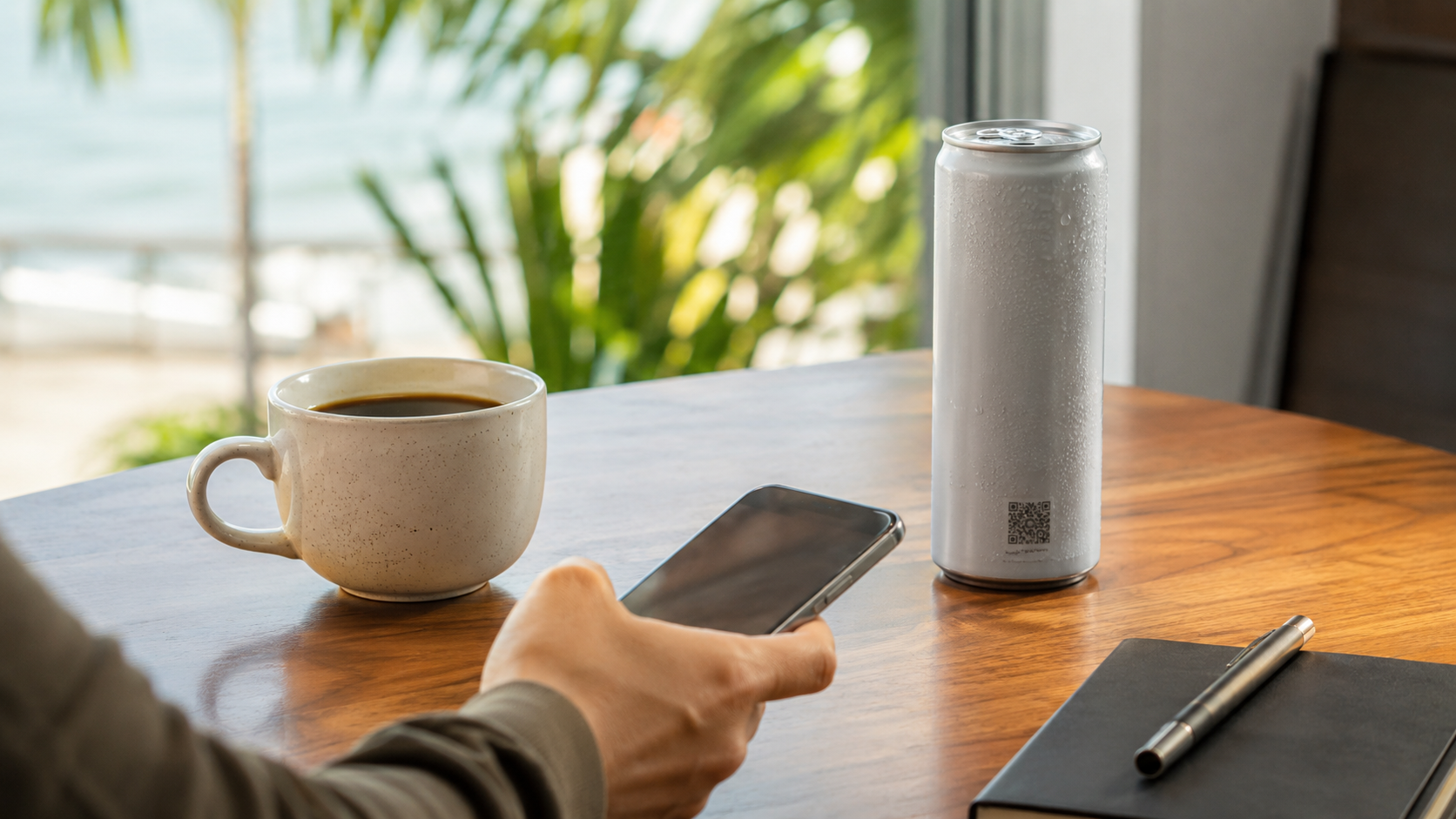
Cannabis + caffeine guide · Adults 21+
Coffee, energy drinks and THC can overlap in the same day. This evidence-led guide separates a 2025 human trial from older animal research and shows what to check before combining them.
Featured answer
THC and caffeine can be consumed together, but caffeine does not cancel THC or make an impaired person safe to drive. A small 2025 human trial found minimal average changes when 180 mg caffeine was added to 7.5 mg oral THC, yet the study was small and cannot establish that the combination is risk-free. Individual reactions still vary.
One small randomized trial using oral THC, caffeine and CBD.
Coffee is not a proven way to sober up from THC.
Jitters, anxiety, racing heart, nausea or overstimulation.
Feeling awake is not the same as being unimpaired.
What we know—and where the evidence stops
| Question | Best current evidence | Important limit |
|---|---|---|
| Does caffeine intensify THC? | Minimal average change at the doses tested in one small human trial. | One trial cannot predict every dose, product or person. |
| Does coffee sober you up? | No evidence shows that caffeine clears THC or restores safe driving. | Alertness and impairment are different questions. |
| Does CBD change the mix? | In the same trial, high-dose oral CBD changed several THC outcomes when all three were combined. | The result should not be generalized to every CBD dose or route. |
| Is the combination “safe”? | Current research is too limited for a universal answer. | Minimal average change does not equal zero individual risk. |
“Weed and coffee” is often framed as a simple balance: caffeine wakes you up while THC settles you down. The biology and the real-life timing are not that neat. Caffeine is a stimulant. THC is intoxicating and can change attention, reaction time, coordination, memory and perception. One does not reliably erase the other.
The more useful questions are practical. What product did you use? How much THC, caffeine and CBD did it contain? Which one started first? Are you still impaired even if you feel awake? Those details matter more than the nickname “hippie speedball” or a friend’s experience.
Related guide: If you already feel uncomfortable, use Mary Jane’s step-by-step guide on what to do when you feel too high.
Article note: Prepared by the Mary Jane’s Bakery Co Editorial Team on August 24, 2026. Reviewed against a 2025 randomized controlled study, federal caffeine guidance, poison-control guidance, driving-safety guidance and live U.S. search results. This is not a medical review.
1. What did the 2025 human study find?
A 2025 randomized, placebo-controlled human study enrolled 20 healthy adults who used cannabis infrequently. Each person attended four sessions, allowing researchers to compare several oral combinations under controlled conditions.
| Study condition | Amounts used | Main finding |
|---|---|---|
| Placebo | No active THC, caffeine or CBD | Baseline comparison. |
| THC | 7.5 mg oral THC | Active THC comparison. |
| THC + caffeine | 7.5 mg THC + 180 mg caffeine | Caffeine produced minimal average changes in THC-related subjective effects, performance or pharmacokinetics; researchers observed signals involving perceived driving impairment. |
| THC + caffeine + CBD | 7.5 mg THC + 180 mg caffeine + 105 mg CBD | The three-substance condition increased several subjective THC effects and raised measured THC and active-metabolite concentrations compared with THC alone. |
The careful conclusion is narrow: caffeine did not dramatically change the average THC response at this study’s tested doses and conditions. That does not make caffeine an antidote, and it does not make the combination risk-free.
2. What can this study not tell us?
Twenty participants cannot represent the full adult population.
Results may differ in frequent users or people with higher tolerance.
A 7.5 mg oral THC dose with 180 mg caffeine does not cover every product.
A lab session is not a hot Miami afternoon, nightclub or long drive.
An older THC-and-caffeine study in rats found that caffeine intensified short-term memory impairment from a low THC dose. That supports caution and further research, but an animal result should not be presented as proof that the same thing will happen to a person.
3. Why can THC and caffeine feel different together?
Caffeine can increase alertness. The FDA identifies increased heart rate, palpitations, anxiety, jitters, nausea and sleep disruption among signs of excessive caffeine intake. Cannabis exposure guidance also notes rapid heart rate, sedation and loss of coordination. If those sensations overlap, the experience may feel uncomfortable even when a controlled study does not show a large average interaction.
Baseline sensitivity matters. Someone who becomes shaky after one energy drink starts from a different place than a regular coffee drinker. A first-time edible user also has a different THC baseline from an experienced adult. Food, sleep, medicines, stress and other substances can add more variability.
THC + caffeine is not the same as THC + caffeine + CBD
The 2025 trial found its clearer changes when high-dose CBD was added to oral THC and caffeine. That does not mean CBD always makes THC stronger. It means the full cannabinoid profile matters, and a front label that says only “THC drink” may not tell the whole story.
4. Format and timing can change the experience
| Scenario | What may happen first | Main mistake to avoid |
|---|---|---|
| Coffee + THC gummy | Coffee may feel noticeable before the edible fully develops. | Taking more THC because the first serving feels slow. |
| Energy drink + THC vape | Both sensations may appear quickly. | Repeated draws while already jittery or anxious. |
| Caffeinated THC beverage | One container may deliver THC, caffeine, CBD and other ingredients together. | Reading the front label but missing servings and totals. |
| Coffee after feeling too high | Subjective alertness may change before impairment ends. | Assuming coffee makes driving safe. |
| Late-night THC + caffeine | THC effects and caffeine-related sleep disruption may overlap for hours. | Adding more of either substance because sleep does not come quickly. |
Oral products need patience. A drink or gummy may still be developing after the coffee feels obvious. For a clearer beverage timeline, read how long THC drinks take to kick in. Adults who need basic label context can also compare 2.5 mg and 5 mg THC servings without treating either amount as universally safe or predictable.
5. Does coffee sober you up from weed?
No reliable evidence shows that coffee removes THC, reverses intoxication or restores driving ability. It may make someone feel more awake. That subjective alertness should not be mistaken for normal reaction time, judgment, coordination or divided attention. NHTSA’s drug-impaired-driving guidance explains that marijuana can impair motor skills, lane tracking, cognition and multitasking.
Three separate questions:
- Do I feel sleepy? Caffeine may change this feeling.
- Is THC still affecting me? Caffeine does not prove that it is not.
- Am I safe to drive? Feeling awake cannot answer this.
If THC may still be affecting you, do not drive. Time, a safe setting and sober transportation matter more than trying to cover the feeling with another psychoactive substance.
6. Who should be more cautious?
- People who are new or highly sensitive to THC.
- People who already experience caffeine jitters, panic or palpitations.
- Anyone with heart rhythm, blood-pressure or other relevant medical concerns.
- Anyone taking medicines or supplements that may interact with caffeine, CBD or THC.
- People who are pregnant or breastfeeding.
- Anyone who must drive, work at height, swim alone or operate machinery.
This is not a complete contraindication list. A clinician or pharmacist who knows your health history is better placed to answer an individual interaction question.
7. Practical adult-use precautions
Run a 60-second same-day intake audit
| Record | What to include | Why it matters |
|---|---|---|
| Caffeine sources | Coffee, tea, soda, energy products, pre-workout and supplements | The total may be higher than one drink suggests. |
| Cannabinoids | THC amount, CBD amount, route and servings | The full blend—not the product nickname—defines the exposure. |
| Time used | Approximate time for every active product | Oral THC may still be developing after caffeine feels obvious. |
| Current condition | Jitters, anxiety, sleepiness, nausea, racing heart or impaired coordination | New or worsening symptoms are a reason to stop, not add more. |
- Know each baseline. Understand how caffeine and THC affect you separately before considering a combination.
- Change one variable at a time. Do not increase the THC and caffeine amounts together.
- Count the full day. Coffee, tea, soda, energy products and pre-workout can all add caffeine.
- Read both totals. Check THC and caffeine per serving and per container.
- Check the cannabinoid blend. Look for CBD, CBG, CBN and other active ingredients.
- Respect oral timing. Allow the product’s labeled onset window before making another decision.
- Plan transportation first. Do not use caffeine as a strategy to become “safe” to drive.
- Avoid extra variables. Adding alcohol or several unfamiliar products makes the response harder to interpret.
8. What should you do if the combination feels bad?
- Stop taking THC, caffeine and alcohol.
- Move to a quiet, comfortable place away from traffic, stairs, pools and other hazards.
- Sip water and reduce noise, screens and stimulation.
- Stay with a trusted sober adult when possible.
- Do not drive, cycle or try to “walk it off” in an unsafe area.
- Keep the packages nearby so you can report the ingredients and amounts accurately.
For a fuller non-emergency response, read how to calm down when THC feels too strong. For U.S. poison questions, use webPOISONCONTROL or call 1-800-222-1222. Call 911 if someone collapses, has a seizure, has trouble breathing or cannot be awakened.
9. THC and caffeine label checklist
A product can look like one simple drink while containing several active ingredients. Read it in this order:
Milligrams per serving, servings per container and total THC.
Total milligrams from coffee, tea, guarana or added caffeine.
CBD, CBG, CBN and the full cannabinoid profile.
Serving, onset, storage and warnings from the manufacturer.
Batch or lot, QR code, COA and expiration date.
Include other coffee, energy products, gummies, tinctures or vapes used that day.
Use Mary Jane’s 60-second cannabis COA guide to match the package to the lab report and confirm the cannabinoid units.
10. THC drinks, coffee and Miami plans
Miami makes the combination easy to encounter: cold brew, energy drinks, beach afternoons, late nights and hemp-derived THC beverages can all fit into one plan. Heat, dehydration, lack of sleep and alcohol can make an already complicated situation harder to read. The useful move is to track every active ingredient and arrange transportation before using THC.
If you are comparing products, do not assume a fruity flavor or slim can is caffeine-free. Confirm the package and COA. Adults can view Mary Jane’s verified Delta-9 THC drink category, which showed four live beverage products when this guide was prepared. Availability may change. For pickup and local-delivery information, check the Wynwood–Miami location page.
11. Authoritative sources
| Source | What it supports |
|---|---|
| 2025 randomized THC, caffeine and CBD study | Human trial design, findings and limits. |
| THC and caffeine working-memory animal study | Preclinical memory evidence, separated from human evidence. |
| FDA caffeine guidance | Caffeine sensitivity and signs of excessive intake. |
| NHTSA drug-impaired driving | THC, cognition, motor skills and driving caution. |
| Poison Control | U.S. poison help and emergency escalation. |
12. FAQs about THC and caffeine
Does caffeine make a THC high stronger?
Not consistently in the small human study available. At the tested amounts, caffeine produced minimal average changes in several THC outcomes. Individual reactions can differ, and older animal research should not be treated as a prediction for one person.
Can coffee sober you up from an edible?
No. Coffee may change how alert you feel, but it has not been shown to remove THC or restore safe judgment, reaction time and coordination.
Can I drive if coffee makes me feel awake?
No. Do not drive after THC while any impairment may remain. Feeling awake is not proof that driving-related skills are normal.
Is a caffeinated THC drink different from coffee plus a gummy?
It can be. The ingredients arrive together, but the label may contain multiple servings, cannabinoids or caffeine sources. With coffee and a gummy, caffeine may feel noticeable before the edible fully develops.
Is CBD and caffeine the same as THC and caffeine?
No. CBD is not intoxicating like THC. Products may contain all three, and the 2025 trial found different outcomes when high-dose oral CBD was added to THC and caffeine. Read the complete label and matching COA.
What if my heart is racing after THC and an energy drink?
Stop both substances, sit somewhere calm and do not drive. Contact Poison Control or a healthcare professional for individualized guidance. Call 911 for severe or worsening symptoms, trouble breathing, seizure, collapse or inability to wake.
How long should I wait before having more?
There is no universal wait time for every product. Follow the specific package directions and remember that oral THC may continue developing after caffeine feels obvious. Do not redose simply because the effects are not immediate.
13. Bottom line: caffeine does not cancel THC
The latest human evidence does not show a dramatic average caffeine–THC interaction at one tested dose, but it does not establish universal safety. Product format, timing, tolerance, CBD content, caffeine sensitivity and health history still matter. Read both labels, count the full day’s caffeine, do not use coffee to justify driving, and stop if the combination feels uncomfortable.