

THC Safety Guide
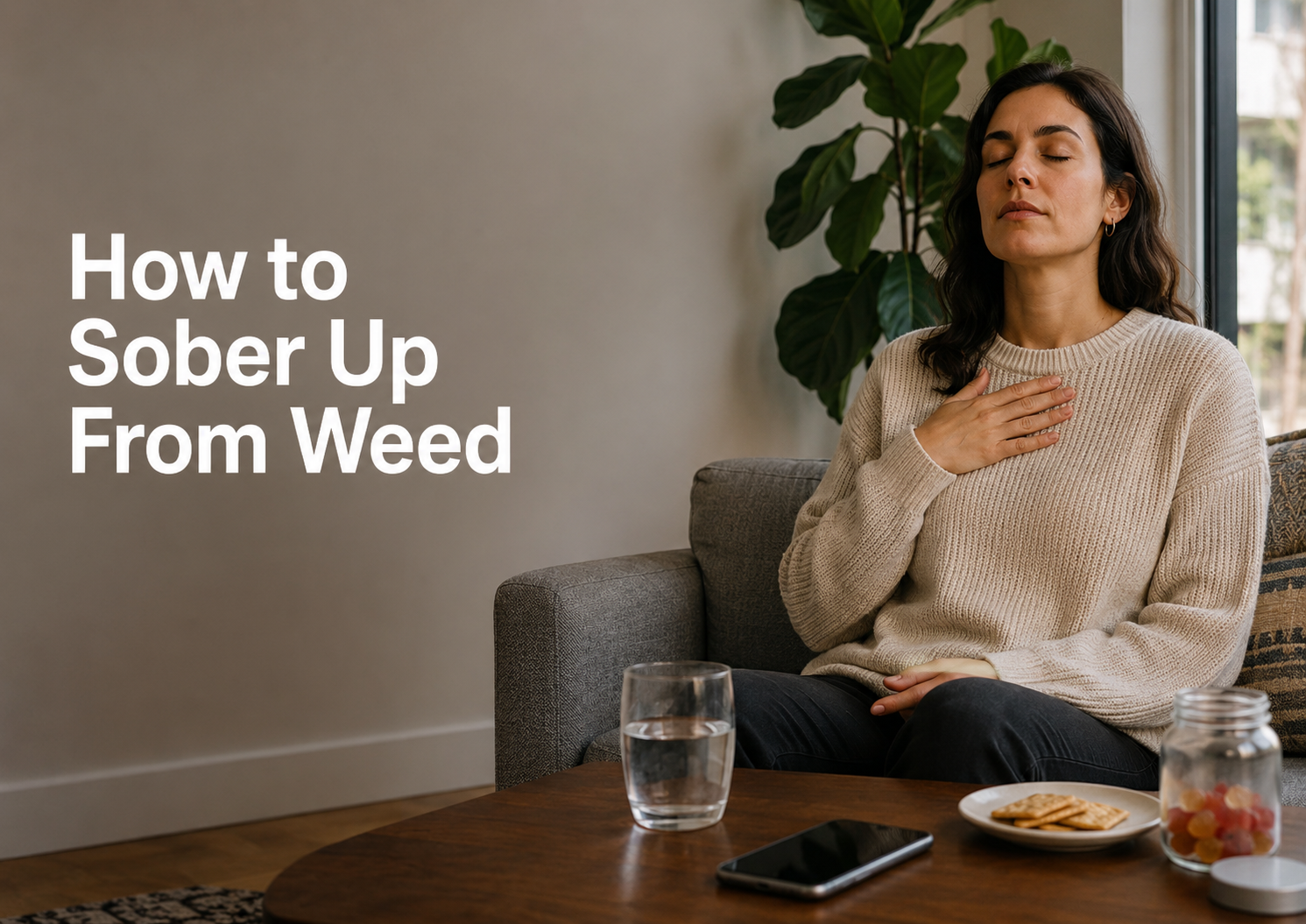
Feeling too high can be frightening, especially when anxiety or paranoid thoughts show up. The safest first step is simple: stop taking THC, move to a quiet and safe place, stay with a trusted sober person, and let time pass. Do not drive or try to force the effects away with an unverified remedy.
Featured answer: How do you sober up from weed?
There is no reliable way to end a cannabis high instantly. Stop using THC, sit or lie down somewhere calm, sip water if you are thirsty, and stay with a trusted sober person. Avoid driving, alcohol, more cannabis, and random pills. Call 911 if someone collapses, has a seizure, has trouble breathing, or cannot be awakened. In the U.S., Poison Control is available at 1-800-222-1222.
Stop
Do not take more THC while you feel unwell.
Get calm
Sit somewhere quiet and familiar.
Stay connected
Ask a trusted sober person to stay nearby.
Know when to get help
Breathing trouble, seizure, collapse, or inability to wake needs 911.
Quick action table: what to do if weed feels too strong
| When | What to do | Why |
|---|---|---|
| Right now | Stop THC, sit down, and move to a quiet, safe place. | Prevents more exposure and lowers immediate risk. |
| While you wait | Stay with someone sober, breathe gently, and sip water if comfortable. | Comfort and reassurance can help you manage the experience as it passes. |
| If you are unsure what was taken | Call Poison Control at 1-800-222-1222 in the U.S. | A poison specialist can advise based on the product, amount, timing, and symptoms. |
| Emergency signs | Call 911 for collapse, seizure, breathing trouble, or inability to wake. | These symptoms need urgent care. |
This is a safety guide, not a diagnosis. If symptoms are severe or worsening, get professional help.
Adult-use and safety note: This article is general education, not medical advice or emergency care. Cannabis products are for adults only where lawful. Do not drive after using THC. Keep cannabis and hemp products away from children and pets.
Article note: Prepared by the Mary Jane’s Bakery Co Editorial Team and checked against the public-health sources linked below in September 2026. This article has not been medically reviewed.
Jump to what you need
1) What to do right now if you feel too high
Keep the next steps simple. The goal is to reduce risk and stay comfortable while your body processes THC.
- Stop using cannabis. Put away the edible, drink, vape, flower, tincture, or other THC product. Do not take another dose while you feel unwell.
- Move to a calm, safe place. Sit or lie down in a familiar room. Reduce noise, bright lights, crowds, and other stimulation. If you feel dizzy or unsteady, do not walk around alone.
- Tell a trusted sober person. Let them know what you took, how much you think you took, and when. Ask them to stay nearby and help you get care if symptoms worsen.
- Breathe gently. Take comfortable breaths and let the exhale be a little longer than the inhale. Stop if a breathing exercise makes you feel worse.
- Sip water if you are thirsty. Water may ease dry mouth, but it does not remove THC or make you sober faster. Do not force food or drink if you are very drowsy, vomiting, or having trouble swallowing.
- Keep the car parked. Do not drive, cycle in traffic, operate machinery, or do tasks that require good coordination and judgment while impaired.
2) What will not sober you up faster
Many popular “get unhigh fast” tips have not been shown to quickly reverse cannabis intoxication. Do not treat a home remedy as an antidote.
| Common suggestion | What to know | Safer choice |
|---|---|---|
| Drinking lots of water | It may help with thirst or dry mouth, but it does not flush THC out or end the high. | Sip normally if you are alert and able to swallow. |
| Coffee or energy drinks | Caffeine is not a THC antidote. Adding stimulants is not a reliable way to feel sober. | Avoid adding substances and focus on a calm, safe setting. |
| Cold showers or exercise | They do not reliably reverse intoxication and may be risky if you feel dizzy or uncoordinated. | Sit or lie somewhere safe and let time pass. |
| More cannabis, alcohol, pills, or unfamiliar CBD | Adding substances can make the effects less predictable. CBD is not a proven emergency off switch. | Do not take more. Contact Poison Control if substances were mixed or you are unsure what was taken. |
| Black pepper or citrus as a cure | These are discussed online, but they are not established treatments that remove THC or reliably end intoxication. | Use the basic safety steps above and get help for concerning symptoms. |
3) How long does a weed high last?
There is no exact countdown for everyone. Product type, amount, THC concentration, how it was taken, other substances, and individual response can all affect the experience. Inhaled cannabis is usually felt sooner. Edibles and drinks can take longer to start and may last longer than expected.
| Product type | When effects may begin | Timing to remember |
|---|---|---|
| Smoked or vaped cannabis | Often within seconds or minutes | Effects can keep building after the first inhalation. Do not take repeated hits just because the first one feels mild. |
| Edibles or THC drinks | Often 30 minutes to 2 hours | It may take up to 4 hours to feel the full effects, and the effects may last much longer than expected. Do not redose while waiting for the first serving. |
These are general ranges, not a promise about when someone is safe to drive. Health Canada says edible effects can take up to 24 hours to fully wear off, and the CDC warns that edible effects may last longer than expected. If you still feel impaired, do not drive even if the strongest part of the high seems to have passed. See the CDC guidance on cannabis and poisoning and Health Canada’s information on cannabis effects and timing.
4) Can weed make you anxious or paranoid?
Yes. The CDC says cannabis can cause disorientation and unpleasant thoughts or feelings, including anxiety and paranoia. Someone may feel watched, judged, unsafe, or convinced that something bad is happening. The feeling can be intense, but it does not by itself establish a mental-health diagnosis.
The experience can depend on the amount and THC strength, the product, the setting, prior experience, and whether cannabis was mixed with alcohol or other drugs. If anxiety or suspicious thoughts show up, stop using THC, move to a calmer place, and stay with someone sober. Speak calmly and focus on immediate safety. Do not argue with or shame someone who is frightened.
Severe confusion, hallucinations, delusions, dangerous behavior, or inability to stay safe needs prompt professional attention. If symptoms recur after the high has passed, contact a healthcare professional. Read the CDC overview of cannabis and mental health.
5) When should you call 911 or Poison Control?
Call 911 now if the person collapses, has a seizure, has trouble breathing, cannot be awakened, or appears to be in immediate danger. Follow the dispatcher’s instructions.
For a concerning reaction that is not immediately life-threatening, contact a healthcare professional or Poison Control in the U.S. at 1-800-222-1222. You can also use webPOISONCONTROL. Call promptly if a child may have eaten cannabis, if the substance or amount is unknown, or if cannabis was mixed with another drug or medication. If you are unsure whether a symptom is an emergency, call for professional guidance rather than guessing.
Do not leave someone who is severely confused or difficult to wake alone to “sleep it off.” If a child or pet may have consumed THC, contact Poison Control, a veterinarian, or emergency services as appropriate.
6) How to lower the chance of feeling too high next time
- Read the product label and serving information before use. Do not estimate THC from package size or appearance.
- Remember that edible and drink effects are delayed and may keep building. Follow legal product-label directions and avoid taking more while waiting.
- Avoid combining cannabis with alcohol or other intoxicating substances.
- Do not use a product if the contents, dose, or label are unclear. Keep cannabis products away from children and pets.
- If cannabis repeatedly causes panic, paranoia, or other distress, consider avoiding it and discussing the reaction with a healthcare professional.
For related information, see Mary Jane’s guides to greening out and scromiting and how long THC drinks may take to kick in.
7) Frequently asked questions
What is the fastest way to get unhigh?
There is no reliable instant method. Stop using THC, stay somewhere calm and safe, avoid driving and other substances, and give your body time to process it. Get help for severe or worsening symptoms.
Can water sober you up from weed?
No. Sipping water may help with thirst or dry mouth, but it does not quickly remove THC or end intoxication.
How do you sober up after an edible?
Do not take more. Edible effects may take 30 minutes to 2 hours to begin and can continue building for several hours. Stay somewhere safe, avoid driving and alcohol, and contact Poison Control or a healthcare professional if you are concerned.
Does CBD stop a THC high?
CBD is not a proven emergency treatment or guaranteed way to end a THC high. Avoid experimenting with unfamiliar products while impaired.
Should I let someone sleep if they are too high?
Rest may be reasonable only if the person is responsive, breathing normally, and in a safe place. Do not leave someone alone if they cannot be awakened, have trouble breathing, collapse, have a seizure, or are severely confused. Call 911 for emergency signs.
Can weed cause paranoia?
Yes. Cannabis can cause anxiety or paranoid thoughts in some people. Reduce stimulation, stop using THC, stay with a sober person, and seek professional help if symptoms are severe, recur, or continue after the high passes.
8) Official sources used for this guide
| Source | What it supports |
|---|---|
| CDC: Cannabis and Poisoning | Delayed edible effects and the risk of overconsumption. |
| CDC: Cannabis and Mental Health | Possible anxiety, paranoia, and disorientation. |
| Health Canada: Cannabis effects and timing | General onset and duration ranges by consumption method. |
| Poison Control: Cannabis risks and effects | Unexpected reactions and Poison Control guidance. |
| Poison Control: When to get immediate help | Emergency signs and how to reach Poison Control. |
Editorial note: Prepared by the Mary Jane’s Bakery Co Editorial Team and checked against the public-health sources above in September 2026. This version has not been medically reviewed. Add a named clinician review only after a qualified professional has completed one.