

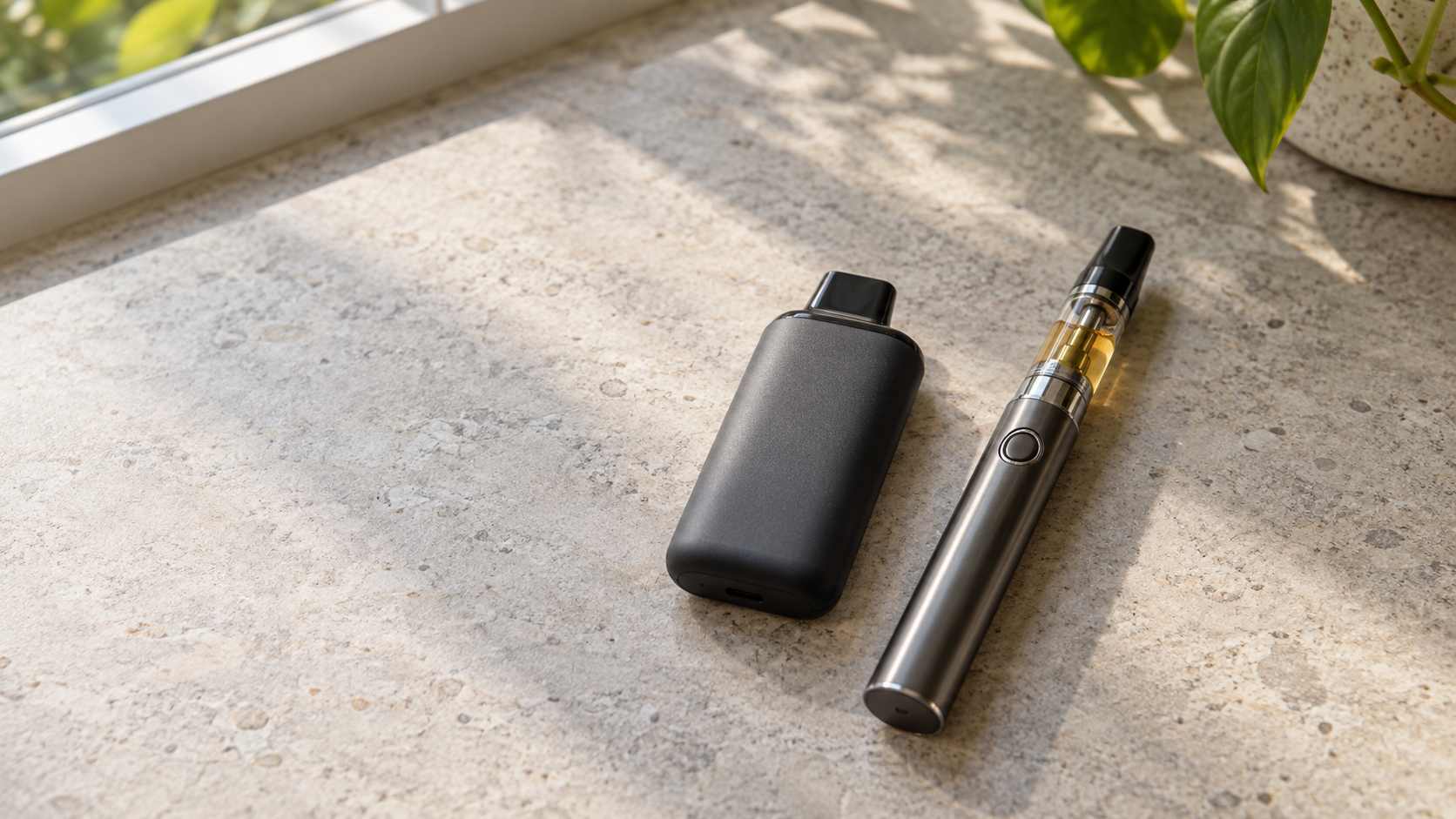
Device care · Disposable vapes and 510 cartridges
Start with the heat you already noticed: where it appeared, when it happened, and what else changed. The device type helps determine the next step.
Why is my vape getting hot?
A vape may feel warm because its heater is active. Depending on the model, repeated draws, restricted airflow, unsuitable settings, external heat, charging problems, or a device fault can affect the heat pattern. The heat location and timing matter. Stop using and charging an unusually hot or damaged device. For smoke or fire, leave the area and call 911.
Heat location
Mouthpiece, cartridge, battery body, or charging connection?
Heat timing
After draws, while charging, after storage, or while idle?
Device format
A sealed disposable or a separate 510 battery and cartridge?
Other changes
Swelling, leaking, damage, unusual noise, or unexpected activation?
1. Where and when is your vape getting hot?
| Heat pattern | What it may involve | Next step |
|---|---|---|
| Mild cartridge warmth after repeated draws; no other warning signs | Heat from recent heater activity | Pause. Check the exact model’s normal-use instructions. |
| Mouthpiece or cartridge suddenly hotter than usual | A change in heating, airflow, or operation | Stop use and ask the maker about the changed behavior. |
| Unusual heat at the charging port, cable end, or battery body | A charging or battery issue | Stop charging; disconnect power only if safe. |
| Heat while sitting unused | Unexpected activation or another fault | Keep it out of use and off the charger. Contact the maker. |
| Heat with swelling, damage, leaking, odor, or unusual noise | A battery warning sign | Do not open it. Ask the maker for handling instructions. |
| Smoke or fire | An immediate emergency | Leave the area and call 911. Do not pick up or carry the device. |
On mobile, swipe to see every column. Possible explanations are not a device diagnosis.
A warm cartridge after use and a hot battery on a desk can look like the same complaint. They involve different parts and different conditions. Knowing those details makes a support request more useful.
This guide covers sealed disposables and removable 510 setups, including devices sold for CBD or THC. It explains possible causes, the limits of ordinary checks, and how to describe the problem without recreating it.
Research draft prepared for the Mary Jane’s Bakery Co. Editorial Team · Sources checked October 7, 2026 · Published manufacturer and fire-safety guidance; no hands-on testing or medical review.
2. Is normal warmth different from overheating?
The heater produces heat during a draw, and nearby parts may warm too. Repeated activation gives that heat less time to dissipate. That can explain mild warmth around a cartridge or pod, but it does not explain every hot battery or charging connection.
There is no universal exterior temperature or “comfortable to hold” test that certifies every vape. A surface reading also cannot establish the internal condition of its battery. Follow the exact model’s instructions rather than applying another device’s limits.
The U.S. Fire Administration identifies excessive heat, odor, leaking, shape or color changes, and odd noises as reasons to stop using lithium-ion batteries.
Cooling is not a clearance test. A faulty device can lose heat while unused. That does not prove its battery, charging circuit, or controls are suitable for use again.
3. What can make a vape hotter than usual?
Separate heat around the active heater from heat involving the power unit. Vaporesso’s explanation of device heat describes how activation, power, and airflow can affect some designs. Its nicotine-device settings should not be copied into a cannabinoid cartridge setup.
| Contributor | Where it may apply | Why it matters | Useful distinction |
|---|---|---|---|
| Repeated or long activation | Disposable, pod, or 510 setup | Heat can accumulate around the heater between closely spaced draws. | Recent heater warmth differs from heating while idle. |
| Restricted airflow | Devices with air openings or airflow controls | Air movement affects heat around the heating area during use. | Check the model’s normal controls; do not insert tools or bypass restrictions. |
| Unsuitable settings or components | Adjustable devices or separate battery/cartridge setups | The installed components and power settings must be compatible. | A “510” connection does not supply one universal voltage or wattage rule. |
| External heat | Any battery-powered format | Sun exposure or hot storage can warm a device before use begins. | Report where it was stored and whether it was already warm. |
| Charging problems | Rechargeable devices | Equipment, connections, or the charging system may be involved. | Do not treat port or battery heat as ordinary coil warmth. |
| Damage or unintended activation | Disposable or separate battery | Abnormal operation may involve electrical or internal component faults. | Settings changes cannot establish that a suspect battery is safe. |
Only an undamaged device operating normally belongs in routine setup guidance. Keep a device with abnormal heat or other warning signs out of service.
Repeated draws: heat can build around the heater
Closely spaced activations add heat before the heating area has fully cooled. Mild warmth after use can fit this pattern. A battery getting hot while idle does not. Do not copy a fixed puff length or waiting period from another model.
Airflow and settings: the controls must match the device
On the PALM Pro, CCELL describes airflow control as affecting vapor warmth. A sealed disposable may offer no comparable adjustment. Use only controls documented for your exact model, and confirm battery/cartridge compatibility. These routine checks do not clear an overheating battery for further use.
What about a burnt taste or low liquid level?
Some refillable nicotine devices can develop heating-area problems when liquid does not reach the wick as intended. That does not justify opening or refilling a sealed disposable. A burnt taste alone cannot identify a battery fault.
Our burnt-tasting disposable guide covers that symptom. For routine setup of a cool, undamaged 510 device, see the THC cartridge voltage guide.
4. Which part became hot?
Use these illustrations to name an area you already noticed. Shapes and component positions vary by model; the drawings are not photographs, internal layouts, or temperature maps.
Sealed disposable
Separate 510 setup
5. What if a vape gets hot while charging?
Some devices may become mildly warm during routine charging, but unusual port or battery heat needs attention. The exact model’s charging instructions matter. Stop charging a device that becomes unusually hot and disconnect power only if safe.
Do not repeatedly swap cables or reconnect the device to see whether the problem returns. Record the charger and cable already used, whether the connection appeared loose or damaged, and whether it was covered or in a hot environment.
For routine charging of a suitable device, the FDA’s vape battery guidance recommends following the instructions and using a clean, flat surface away from flammable materials where the device is visible.
The FDA page addresses e-cigarettes; it does not certify every CBD or THC device. A USB connection that fits is not proof that the power source is appropriate. Our disposable charging guide covers routine timing questions.
6. Disposable vape vs. removable 510 cartridge
A sealed disposable
The heater and battery may share one housing. External warmth cannot reliably identify an internal fault.
Do not pry it open, refill it, rewire it, or attempt battery repairs. Being rechargeable does not make it user-serviceable.
A separate 510 setup
Report both the battery model and cartridge. They are separate components, even when sold together.
Ordinary cartridge removal belongs to a cool, switched-off, undamaged setup and must follow its instructions. Do not remove a cartridge from a hot device or test another cartridge on a battery that overheated.
“510” describes a connection, not one operating setting or a battery safety certification. The oil label also cannot tell you whether the battery or charging system is working correctly.
7. Why the exact model changes the advice
These manufacturer-documented examples show why generic instructions may not match the controls on your device. They are not recommendations to change settings on an overheating unit.
| Model | Documented controls | What this illustrates |
|---|---|---|
| CCELL PALM Pro | Three voltage settings, an airflow collar, and inhale activation. | Both the selected setting and available airflow control can be identified in a normal-use support report. |
| CCELL M3 Plus | Two voltage settings through a slide switch, with inhale activation. | Advice to “lower the wattage” does not name the control this model documents. |
Specifications checked October 7, 2026. Manufacturer documentation examples; these models were not tested for this article.
Neither a controls list nor a built-in protection claim proves that a particular damaged device is suitable for use. Give support the exact model name rather than assuming another battery’s instructions apply.
8. Why is a vape hot when nobody is using it?
Unexpected heat while idle can involve unintended activation or another fault. A device warming on a desk without a recent draw belongs in a different category from cartridge warmth immediately after use.
Some models have a designed preheat mode, but do not assume unexplained heating is intentional. Keep the device out of use and off the charger. Use a normal shutoff control only if safe and clearly documented.
Our guide to a vape that keeps hitting after you stop covers continued activation and model-specific distinctions.
9. Miami storage: hot cars, sun, and beach bags
A parked car or bag in direct sun can expose a vape to heat before anyone uses it. The FDA advises protecting vape batteries from extreme temperatures and avoiding hot cars or direct sunlight.
Follow the maker’s storage guidance when planning a drive or beach day. Keep devices away from children and pets, and do not leave them charging in a parked car.
If unusual heat appears after storage, report the exposure to the maker. Do not use a fridge, freezer, water, or ice to make a suspect device usable again. Cooling cannot establish that an unknown battery fault has cleared.
10. What to tell support, and how to handle disposal
Describe the sequence once, using memory or existing records. Do not recreate a fault or handle a dangerous device to read its label or take a photograph.
A useful device heat report
- Device: model; sealed disposable or separate battery and cartridge.
- Sequence: what happened before the heat appeared, such as use, charging, storage, or a drop.
- Location and timing: which area became hot and whether it was active or idle.
- Other signs: swelling, leaking, odor, noise, visible damage, or unexpected activation.
- Charging details: cable and power source already used; label information from existing records if available.
- Purchase: seller, order number, and date.
Your report helps support assess the fault. It cannot confirm the condition of internal wiring, a battery cell, or a charging circuit. Those are not checks to perform by opening a sealed device or repeatedly activating it.
If you bought it from Mary Jane’s Bakery Co., contact our team with the model and what happened. Ask about handling before bringing in or mailing a hot or damaged battery.
Disposal requires the right collection route
The EPA says lithium-ion batteries and devices containing them should stay out of household trash and curbside recycling. Use an appropriate battery or electronics collection option. Ask the manufacturer for damaged-battery handling instructions before transport.
Miami-Dade’s recycling directory lists rechargeable-battery disposal information. Call ahead about acceptance of a whole vape or damaged device; a general battery listing does not confirm every product is accepted.
Choosing a replacement
Compare the exact device instructions and cartridge compatibility. You can browse our CBD cartridge category and ask the team about a setup. A certificate of analysis helps explain product testing, but it does not certify the battery assembly.
11. Sources and what they support
| Source | Scope in this article |
|---|---|
| FDA: Vape battery fire prevention | E-cigarette charging instructions and protection from extreme heat. Does not certify cannabinoid devices. |
| U.S. Fire Administration: Battery safety | Lithium-ion battery warning signs and hot-car storage risk. |
| Lansdale Fire Services | Battery fire response and damaged-device precautions. |
| Vaporesso: Heat and device operation | Heater activity, airflow, power, and wicking. Its nicotine-device settings are not universal. |
| CCELL: PALM Pro | Model-specific voltage controls, airflow collar, and activation. |
| CCELL: M3 Plus | Model-specific voltage switch and activation. |
| EPA: Used lithium-ion batteries | Separate collection routes and damaged-battery handling. |
| Miami-Dade: Recycling A to Z | Local rechargeable-battery information, subject to acceptance requirements. |
Exact device manuals take priority for operating requirements. Product specifications are not an independent test of a reader’s device.
12. Frequently asked questions
Why is my disposable vape getting hot after one puff?
It may already have been warm from storage, or the changed behavior may involve a device problem. One draw cannot identify the cause. If the heat is unusual, especially near the battery, stop using it and contact the maker rather than taking test draws.
Why does my vape mouthpiece feel hot?
The mouthpiece is near the heating area, so warmth can travel toward it during use. Repeated activation and airflow can affect some designs. Stop if it becomes unusually hot or uncomfortable; location alone does not establish safety.
Can I use a vape after it cools down?
Cooling shows that it lost heat, not that a fault cleared. A device with abnormal battery heat, damage, or charging problems should remain out of service while you follow the maker’s support advice.
How long should an overheating vape cool?
No universal waiting period makes an overheating device safe. Follow model-specific handling advice instead of restarting it after a fixed number of minutes.
Should I use the fridge or freezer to cool it?
No. Do not use rapid-cooling methods to make a suspect device usable again. Follow the maker’s handling guidance, and do not put it in water or on ice.
Why is my battery hot when the vape is off?
Unexpected idle heat can involve a fault or unintended activation. Stop use and charging. If it is smoking or burning, keep clear, leave the area, and call 911 in the U.S.
Can I finish the oil if the battery overheated?
Remaining oil does not make a suspect battery suitable for use. Do not open a sealed disposable to recover its contents. Ask the maker or seller about product-specific support and disposal.
Does CBD or THC oil change battery safety?
The contents do not remove electrical risks. Hardware compatibility, its condition, charging instructions, and abnormal behavior still matter.
13. Before you use it again
Start with the location, timing, and exact model. Use normal operating instructions for ordinary heater warmth, and keep abnormal battery or charging heat out of service. For a Mary Jane purchase, send our team your device heat report.