

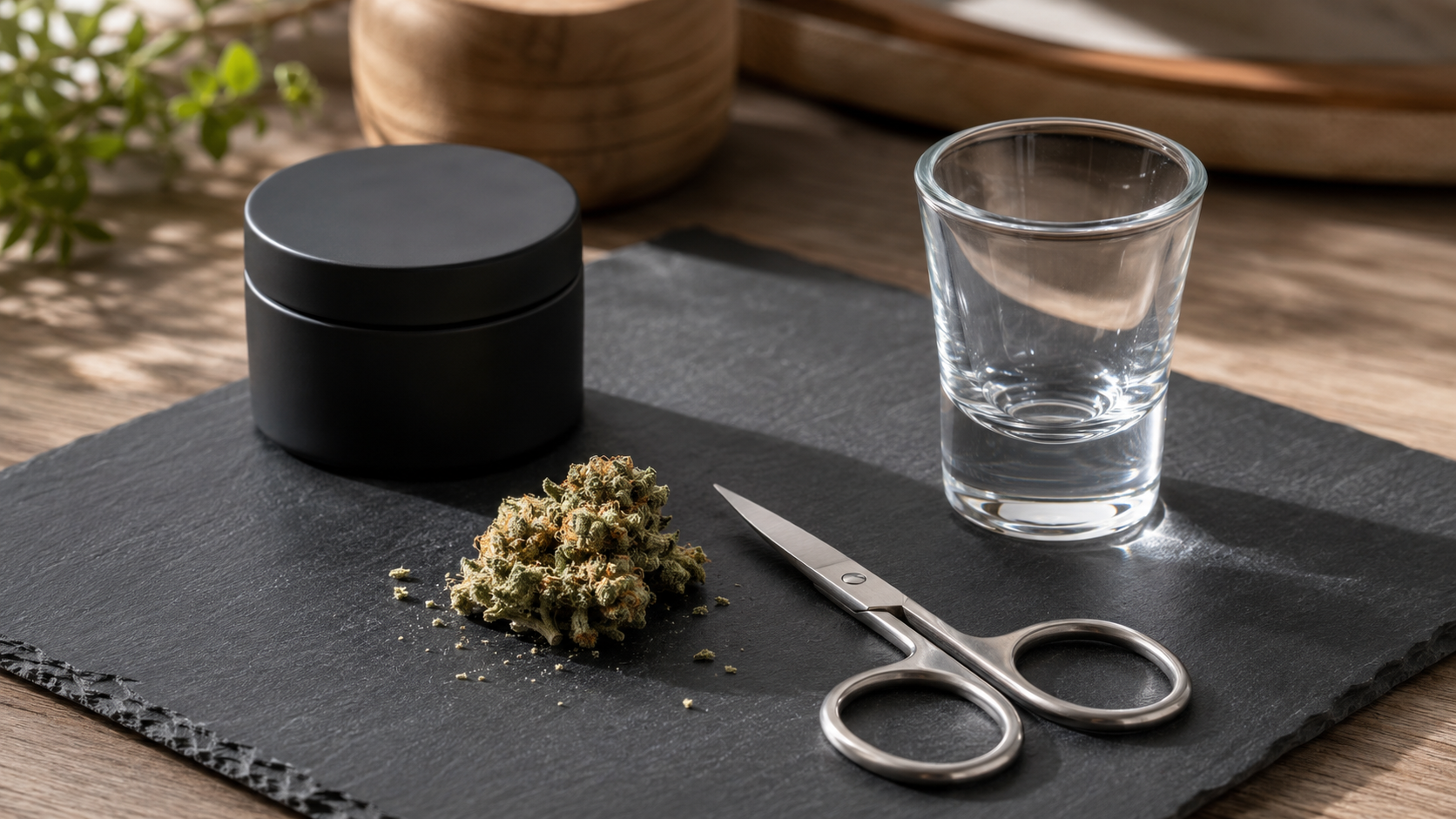
The 30-second no-grinder checklist
- Check that the flower looks and smells normal. Do not use damp, moldy, or contaminated flower.
- Wash and dry your hands. Use only a clean, completely dry tool and surface.
- Remove thick stems and seeds before breaking up the flower.
- Choose the lowest-mess method available: scissors and a small glass are the best all-around option.
- Stop at a loose, even texture. Do not crush the flower into dust.
- Clean the tool afterward and store unused flower in its original sealed container.
Best ways to grind weed without a grinder
| Method | Control | Mess | Main caution | Best use |
|---|---|---|---|---|
| Scissors + shot glass | High | Low | Use clean scissors and cut slowly | Best overall |
| Clean fingers | Medium | Medium | Sticky resin can remain on skin | Small amount, no tools |
| Knife + cutting board | High | Medium | Cut away from your hands | Dry, dense flower |
| Mortar + pestle | Medium | Medium | Easy to over-crush | Very dry flower |
| Dedicated coffee grinder | Low | High | Can turn flower into powder quickly | Larger amount only |
1. Scissors and a shot glass: the best all-around method
For most people, small scissors and a shot glass give the best balance of control, speed, and easy cleanup. The glass keeps loose pieces contained, while the scissors let you stop before the flower becomes too fine.
- Make sure the scissors and glass are clean and completely dry.
- Break one bud into two or three smaller pieces and remove the thick stem.
- Place the flower in the glass.
- Snip slowly while turning the glass, checking the texture every few cuts.
- Stop when the pieces look loose and reasonably even.
Do not hold the flower in your fingertips while cutting. Keeping it inside the glass lowers the chance of a cut and catches small pieces that would otherwise stick to a counter or disappear into fabric.
2. Break it up with clean fingers
If you have no tools, clean hands are the simplest backup. Wash and dry them first, then pull the flower apart over a tray, plate, or clean sheet of plain paper. Remove large stems as you go and aim for similar-size pieces.
This method is quick for one small bud, but it is less consistent than scissors. Sticky flower can also leave resin on your fingertips. Avoid squeezing or rolling it between your palms; gentle pulling keeps the pieces looser and reduces waste on your skin.
3. Use a knife and clean cutting board
A clean knife and cutting board work well when the flower is firm enough to stay in place. Treat it like chopping a small amount of a dried culinary herb: use slow, controlled cuts and gather the pieces back toward the center between passes.
- Use a stable board on a flat counter.
- Choose a clean, dry, non-serrated knife.
- Keep your fingertips away from the blade.
- Do not use a board that still carries food, cleaner, or strong odors.
A few deliberate passes are usually enough. Rapid mincing creates more mess and makes it easier to turn the flower into dust.
4. Try a mortar and pestle only for dry flower
A mortar and pestle can break down dry flower, but it needs a light hand. Pressing hard can smear sticky material into the bowl or crush the flower much finer than intended.
Add a small amount, press gently, and turn the pestle only a few times before checking. Stop while the texture is still loose. This is not the best method for moist or especially sticky flower, and the tool should be cleaned according to its material before it returns to food use.
5. Use a coffee grinder only when it is clean and dedicated
An electric coffee or spice grinder is fast, but it gives you the least control. One long press can create powder, and flower residue can affect anything later prepared in the same appliance. If you use one, a dedicated grinder is better than a shared kitchen grinder.
- Confirm the chamber is clean and dry.
- Add only a modest amount so the blades can move freely.
- Pulse very briefly once.
- Open the lid, inspect the texture, and stop early.
Do not run the motor continuously. For a single bud, scissors or clean fingers usually give better control with less cleanup.
Methods to skip—even if they appear in other guides
| Improvised method | Why it is a poor choice | Better option |
|---|---|---|
| Coin inside a pill bottle | Coins and reused containers can be difficult to clean well; the result is uneven | Scissors inside a clean glass |
| Cheese grater | Small buds put fingertips too close to sharp metal | Knife and stable cutting board |
| Credit card, key, or pocket item | Frequently handled surfaces may carry dirt, coatings, or residue | Clean fingers or dedicated tool |
| Homemade nail or metal-tooth grinder | Sharp parts, loose hardware, adhesives, and surface coatings add avoidable risk | Buy a purpose-built grinder |
| Heating or wetting the flower | Heat and moisture change the material and can create new storage problems | Work with the flower as labeled and stored |
The best emergency method is not the most creative one. It is the cleanest simple method that gives you control without introducing sharp hardware, dirty pocket objects, food residue, or cleaning chemicals.
How fine should you grind flower?
Aim for small, loose, reasonably even pieces—not whole chunks and not powder. The right texture depends on the intended product and device, so follow any manufacturer directions. A medium, fluffy texture is the most versatile starting point because it leaves room for airflow and is easier to adjust.
- Too coarse: large chunks may sit unevenly and restrict airflow.
- About right: loose pieces look similar in size and do not clump into a dense plug.
- Too fine: dusty material is messy, harder to handle, and can pass through screens or restrict airflow when packed tightly.
When in doubt, stop early. You can always make the pieces smaller, but you cannot reverse an over-ground batch.
Check the flower before breaking it up
Grinding spreads whatever is already on the flower across your tool and work surface. Pause if the material is unexpectedly damp, carries a musty or chemical odor, shows fuzzy patches, or looks meaningfully different from when it was purchased. Do not try to grind away a possible quality problem.
Mary Jane’s guide to old, dry, and moldy weed warning signs explains what to check before using stored flower. If the product looks contaminated or the package is damaged, keep it separate and contact the seller rather than guessing.
Sticky flower and moon rocks need a different approach
Infused flower and moon rocks can be much stickier than ordinary buds. A standard grinder, coffee grinder, or mortar may smear the coating into the tool and waste material. Do not treat them like dry flower.
Use a clean, non-sharp tool or clean fingers to separate only the small amount you need, following the product directions. Mary Jane’s Sour Space Candy CBD Moon Rocks page specifically advises breaking off a small piece instead of grinding the full nug.
When a pre-roll is easier than improvising
If you regularly find yourself without a grinder, a ready-to-use pre-roll may fit better than repeatedly bringing kitchen tools into the process. It removes grinding and rolling from the setup, although it does not remove the need to use inhaled products cautiously.
Adults can compare Mary Jane’s live CBD hemp flower selection or a ready-to-use CBD pre-roll. First-time shoppers can also use the beginner cannabis product guide to compare flower, pre-rolls, vapes, tinctures, gummies, and other formats before buying.
Clean tools, safer storage, and responsible use
- Wash tools before and after use, rinse away cleaner, and dry them fully.
- Do not place flower on a phone, wallet, fabric, or other frequently handled surface.
- Do not use tools with rust, peeling coatings, loose parts, or lingering chemical odors.
- Return unused flower to its labeled, sealed container rather than leaving it on a tray.
- Keep flower, pre-rolls, tools, and waste secured away from children and pets.
Grinding does not make smoking harmless. The CDC states that smoked cannabis can harm lung tissue. If THC is involved, do not drive: the CDC’s cannabis and driving guidance says the safest option for anyone intending to drive is not to use cannabis or other impairing substances.
Frequently asked questions
What is the easiest way to grind weed without a grinder?
Use clean scissors inside a dry shot glass. This method contains the loose pieces, offers good control, and makes it easy to stop before the flower becomes powdery.
Can I break up weed with my hands?
Yes. Wash and dry your hands first, remove hard stems, and pull the bud apart gently over a clean tray. It works best for a small amount, though sticky flower may leave more residue on your fingers.
Can I use a coffee grinder for weed?
A clean, dedicated coffee grinder can handle a larger amount, but pulse it only briefly. It can turn flower into powder quickly and may leave residue in a shared food appliance.
Can I use a coin and pill bottle?
It may break up flower, but it is not a preferred method. A coin and reused container can be harder to clean thoroughly and offer less control than scissors and a small glass.
Should weed be ground into powder?
No. A loose, even texture is easier to handle. Powdery flower can be messy, restrict airflow when packed tightly, and pass through some screens.
Do I need to grind moon rocks?
Usually not. Sticky infused flower and moon rocks can smear inside a grinder. Follow the product instructions and separate a small piece with a clean tool instead of grinding the full item.
What if I do not want to grind or roll flower?
Compare a ready-to-use pre-roll or a non-flower format. Check the label, cannabinoid content, lab information, and local rules before purchasing or using any product.
Bottom line
No grinder does not require a risky homemade gadget. Clean scissors and a shot glass are the most controlled backup. Clean fingers or a knife and board can also work for a small amount. Skip dirty coins, pocket items, sharp graters, and DIY metal devices; stop at an even, loose texture; and choose a pre-roll if you want flower without the preparation.