

Hemp oil vs CBD oil · Adult buyer guide
Know the ingredient. Check the amount.
Featured answer
Hemp seed oil is pressed from hemp seeds. CBD oil is formulated to contain cannabidiol, often in a carrier oil. “Hemp oil” can mean either in marketing. Compare the ingredient list, the named CBD amount and the matching batch report. Hemp seed oil can itself be the carrier in a CBD oil, so read the complete formula.
On small screens, scroll sideways to read every column.
| Check | Hemp seed oil | CBD oil |
|---|---|---|
| Main ingredient | Oil pressed from seeds. | CBD-containing extract or isolated CBD, often with a carrier. |
| CBD content | Not a formulated source of CBD; processing traces can occur. | A specific CBD amount should be identified and checked. |
| Typical context | Food or skincare, according to the product label. | A cannabinoid product with a stated route and warnings. |
| Carrier exception | Can be used as the carrier in a CBD formula. | May contain hemp seed, MCT or another carrier oil. |
| Useful evidence | Exact ingredients and intended use. | Ingredients, named cannabinoid amount, lot and applicable COA. |
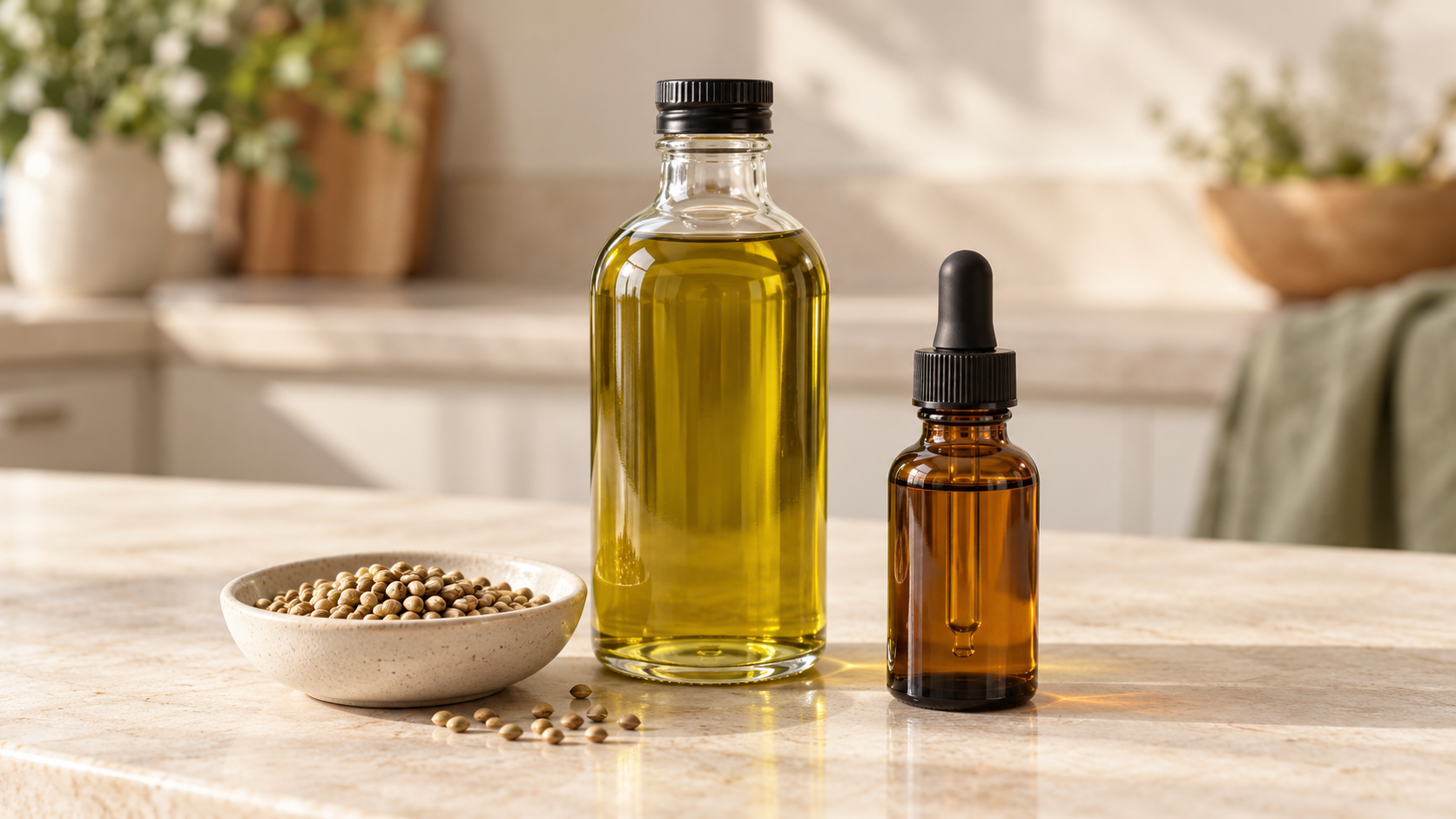
A leaf on a bottle does not tell you which oil it contains. Neither does an amber dropper or a large number. The useful distinction is between a seed ingredient, a cannabinoid ingredient and the evidence supporting the finished product.
Use the comparison above to identify the category, then work through the examples below. The goal is to understand the formula before comparing strengths or prices. A clear label helps with identification; it does not establish treatment benefit or individual suitability.
Research draft for the Mary Jane’s Bakery Co Editorial Team, prepared with AI assistance · Sources checked October 22, 2026. Based on public guidance, published formulas and a linked sample report. No independent product testing, current-lot verification or medical review.
1. Is hemp oil the same as CBD oil?
Not necessarily. “Hemp seed oil” identifies an oil made from seeds. “CBD oil” describes a formulation containing cannabidiol. The shorter term “hemp oil” is used for both, so it leaves a question that the ingredient panel needs to answer.
The FDA explains that hemp seeds do not naturally contain CBD or THC. Seed-derived ingredients can acquire small amounts from contact with other plant parts during harvesting and processing. Avoid treating “not naturally present in the seed” as proof that every finished bottle has absolute zero cannabinoids.
A CBD formulation may combine an extract with hemp seed oil, coconut MCT oil or another carrier. The carrier is part of the formula; its name alone does not identify the CBD amount. On cosmetics, Cannabis Sativa Seed Oil is a seed-derived ingredient name. Check whether cannabidiol or another extract is also listed.
- Only seed oil is identified: do not assume the product supplies a formulated CBD amount.
- CBD and a carrier are identified: check the named CBD content and the applicable report.
- “Hemp extract” appears without a CBD amount: ask for the cannabinoid details.
- The ingredient or amount remains unclear: record it as unverified rather than deciding from the packaging.
2. Three examples: seed oil, MCT carrier and hemp seed carrier
These examples were checked on public product pages on October 22, 2026. They illustrate ingredient descriptions, not a quality ranking, recommendation or independent test. Read the current package because formulas and variants can change.
On small screens, scroll sideways to read every column.
| Product information checked | What the page describes | What it demonstrates |
|---|---|---|
| Nutiva Organic Hemp Seed Oil | Organic hemp seed oil as its ingredient. | A seed-oil product; the word hemp does not establish a formulated CBD amount. |
| Mary Jane’s Rave Juice 1,000 MG tincture | Hemp extract with coconut MCT oil; the page names 1,000 mg CBD in 30 mL. | A CBD-content claim with an MCT carrier; current-lot evidence still needs checking. |
| Endoca CBD Oil 30mg (Medium) | Hemp seed oil alongside cannabidiol-containing ingredients. | A formula can include both hemp seed oil and CBD. |
The useful question is not simply whether a bottle contains hemp seed oil. It is whether CBD has also been included, how its amount is stated, and which evidence applies to the product in hand. A manufacturer’s formula description and a matching laboratory result answer different parts of that question.
3. Which should you choose?
On small screens, scroll sideways to read every column.
| Your purpose | Category to investigate | Check before choosing |
|---|---|---|
| A food oil for dressings or another culinary use | A product labeled for food use, such as hemp seed oil. | Ingredients, storage and the exact permitted cooking directions. |
| An oil or cream for skin application | A product labeled for the intended cosmetic use. | Whether it contains seed oil, CBD or both; ingredients and warnings. |
| A specifically identified CBD formulation | A clearly described cannabinoid product. | CBD and THC amounts, route, carrier, lot documentation and suitability. |
| Help for pain, anxiety, sleep or another health concern | Qualified clinical advice about the concern. | A retail oil name or confirmed CBD amount does not establish an effective treatment. |
Is hemp oil or CBD oil better for pain, anxiety or sleep?
Do not choose a treatment from the oil name. Hemp seed oil is not a substitute for a CBD formulation, and a retail CBD formulation should not be treated as an approved medicine for those concerns. FDA distinguishes its approved prescription CBD drug from products marketed with unproven medical claims. Discuss symptoms and medication questions with a qualified clinician.
Compare only products that answer the same question
A culinary oil sold by volume and a CBD formulation sold with a cannabinoid claim are not interchangeable value comparisons. First identify the category. Then compare the relevant ingredients, amounts and documentation. A larger bottle or higher front-label number is not automatically the better choice.
4. Read the amount, then match the batch
A milligram number needs a named substance and a basis: per bottle, serving or measured volume. These hypothetical examples show why that matters:
- “Hemp oil — 10,000 mg”: does not establish 10,000 mg CBD. Ask what the mass describes.
- “Hemp extract — 1,000 mg”: names an extract amount, not necessarily its CBD content.
- “CBD — 1,000 mg per 30 mL bottle”: names a CBD-content claim. By label math, 1,000 ÷ 30 is about 33.3 mg/mL. That is not a serving recommendation or a measured laboratory result.
Use the CBD dropper-math guide for detailed volume examples. Do not swap mg/g and mg/mL or convert an unspecified percentage into a bottle total without the necessary information.
A report link is the start of the check
- Match the product and bottle lot to the report.
- Read CBD and THC results with their units.
- Check dates, sample identity and the panels actually performed.
- Distinguish not detected, below quantitation and not tested using that report’s definitions.
A COA reports on a submitted sample. A different or unconfirmed lot leaves a gap. Potency results do not establish that every contaminant panel was performed, that every bottle is identical, or that the product suits a particular person.
Worked check: the Mary Jane’s listing and linked report
Compare the 1,000 mg tincture listing with its linked laboratory report. This is a document check, not a test of a bottle purchased today.
On small screens, scroll sideways to read every column.
| Check | Published evidence | What remains to verify |
|---|---|---|
| CBD amount | Listing: 1,000 mg CBD per 30 mL. Report: 1,541.021 mg CBD per package. | The figures differ. Ask the seller to reconcile the documents for the exact lot. |
| Sample identity and date | Report: order 86982, Retail Batch 1, completed May 28, 2024. | No current-bottle lot match was established. A similar product name is insufficient. |
| Testing scope | The report contains cannabinoid results; several contaminant panels are marked not tested. | This report does not substantiate a claim that those panels were completed. |
5. Keep THC, health and FDA questions separate
Will hemp oil or CBD oil make you high?
CBD by itself does not produce a THC-style high. A finished product sold as hemp or CBD may also contain THC or other ingredients, so check the complete formula. The CDC warns about confusing CBD products with THC-containing products. A spectrum term alone does not settle the contents of a bottle or its drug-testing implications.
Full-spectrum, broad-spectrum and isolate describe different formulation approaches. Check the actual cannabinoids and report rather than treating those terms as guarantees. The CBD spectrum comparison guide covers those distinctions.
Safety and regulatory limits
FDA identifies possible CBD-related liver injury, drowsiness and medication interactions. Ask a clinician or pharmacist about suitability. FDA advises avoiding CBD during pregnancy and breastfeeding.
The FDA’s review of specified hemp seed food ingredients does not approve every hemp-branded product. FDA separately states its restrictions on CBD in foods and dietary supplements in its cannabis and CBD questions and answers. Check current product and destination rules; a hemp label does not establish universal shipping or travel permission.
6. What to ask before buying online or in Miami
Save the ingredient panel, named cannabinoid amount, bottle volume and lot details. Then ask the seller one specific question: “Which report applies to the lot currently being sold, and which panels were actually performed?”
If you are comparing Mary Jane’s CBD oil and tincture information, use the same checklist before ordering. At the Mary Jane’s Miami location, ask to see the exact package and available batch documentation. Confirm current availability and applicable restrictions for the item you are considering.
Staff can help locate a label or report; clinical suitability and medication advice belong with a qualified healthcare professional. If the essential product information cannot be clarified, pause the purchase.
Copy this bottle-and-report checklist
Keep these details together in a note or photo record:
- Product name, ingredients and intended route: ____
- Named CBD amount and basis (bottle, serving or mL): ____
- Bottle lot and report sample or batch identifier: ____
- Report date, CBD/THC results, units and tested panels: ____
- Unresolved differences and the seller’s explanation: ____
Record an unresolved match as unverified. An older date alone does not prove a report is invalid; the missing connection to your bottle is the issue.
7. Sources and review basis
We compared published formulas with the cited guidance and inspected the linked sample report. Product descriptions establish what a seller states; sample reports establish the results shown for that sample. No physical bottle was inspected and no laboratory analysis was commissioned.
On small screens, scroll sideways to read every column.
| Source | What it supports |
|---|---|
| FDA: cannabis and CBD Q&A | Seed/cannabinoid distinction and CBD regulatory context. |
| FDA: hemp seed ingredient review | The specified seed-derived food ingredients and scope of that review. |
| FDA: CBD consumer information | Approved-drug distinction, adverse effects and interactions. |
| FDA: pregnancy and breastfeeding | Advice to avoid CBD during pregnancy and breastfeeding. |
| CDC: about CBD | CBD itself versus THC-containing retail products. |
| COSMILE: Cannabis Sativa Seed Oil | Identity of the cosmetic seed-oil ingredient. |
| Nutiva product information; Endoca product information | The two manufacturers’ published ingredient descriptions. |
| Mary Jane’s product information; linked sample COA | The listing and report discussed, with their unresolved connection to current inventory. |
8. Frequently asked questions
Can hemp seed oil contain CBD?
A formula can contain both seed oil and added CBD. Seed oil alone is not a formulated CBD source; processing traces are a separate issue. Check the full formula and evidence.
Does 1,000 mg hemp oil mean 1,000 mg CBD?
No. That wording does not identify a CBD amount. Read the substance beside the number and whether the claim is per package or serving.
Is hemp seed oil a weaker CBD oil?
They are different ingredients. Do not use seed oil as a lower-strength replacement for a product formulated with CBD.
Can a CBD oil use hemp seed oil as its carrier?
Yes. The carrier and the CBD-containing ingredient can appear in the same formula, as the published Endoca example illustrates.
Does a CBD label guarantee no THC or a negative drug test?
No. A product name, spectrum term or sample report cannot guarantee an individual drug-test result. Review any applicable workplace, legal or athletic policy before using cannabinoid products.
What if the QR code opens an older or different report?
Ask for the report applicable to the current lot. A similar product name alone does not connect the sample to your bottle.