

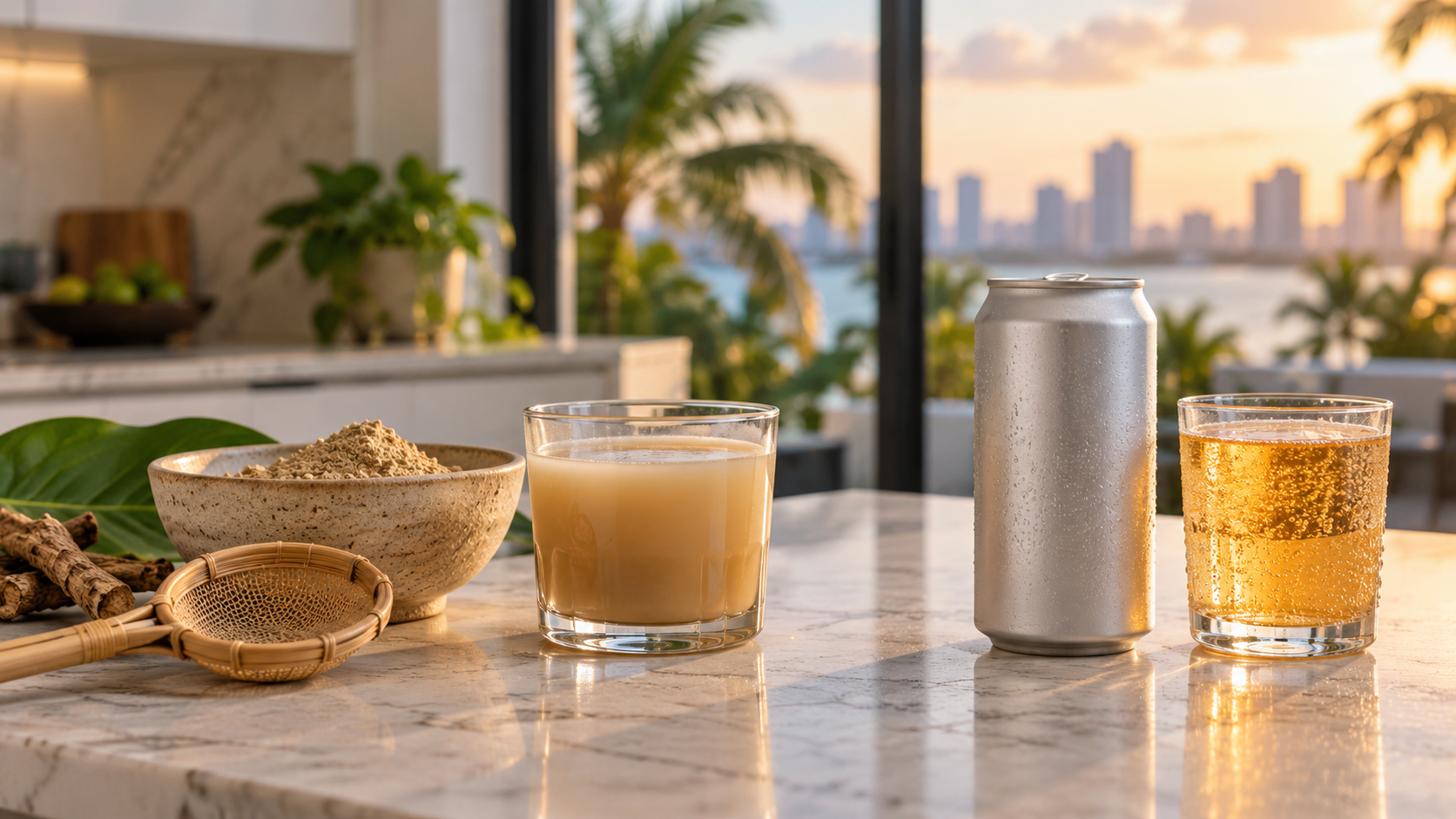
Adult beverage comparison · September 2026
Both can be served in a glass, but a prepared kava drink and a THC beverage contain different active ingredients. Compare the label, possible impairment, drug-testing concerns and preparation before choosing either.
Featured answer
Kava is made from the root of Piper methysticum and contains kavalactones. A THC drink contains an intoxicating cannabinoid, often delta-9 THC. Neither has a universal effect or a dose that converts to the other. Kava can cause drowsiness and has documented liver-safety concerns; THC can impair judgment and appears on common drug-testing panels. Check the exact product label and avoid driving after either.
Kavalactones are not THC.
Compare kava ingredients or kavalactones with THC mg per serving and container.
THC is screened for in federal workplace programs; kava is not on that standard panel.
Do not drive or combine either with other impairing substances.
At a glance: compare the actual products
| Check | Prepared kava drink | THC beverage |
|---|---|---|
| Active ingredient | Kavalactones from kava root or extract | THC; some formulas also contain CBD |
| What the number means | Powder weight and kavalactone claims need a clear batch record | THC mg per serving and total mg per can or bottle |
| Format | May require preparation and straining; ready-to-drink products differ | Usually sold ready to drink; read serving directions |
| Main caution | Liver concerns, medicines, alcohol and drowsiness | Intoxication, delayed effects, redosing and drug testing |
A kava powder mixed at home and a canned THC beverage can look like alternatives for the same evening. Their labels answer different questions, though. One may tell you the weight of the botanical material; the other may list milligrams of THC in each serving and the whole container.
This guide compares the drinks adults actually encounter, including the point where a simple side-by-side comparison breaks down. It also shows which information to check in Miami before buying. It does not rate one substance as universally safer or promise a particular feeling.
Adult-use and safety note: For adults 21+; general education, not medical or legal advice. Kava can cause drowsiness and has been linked to rare but serious liver injury. THC can impair you. Do not drive after either, avoid mixing them with alcohol or other impairing products, and keep them away from children and pets. If you use medicines or have liver concerns, ask a clinician before considering kava. Related guide: kava powder, extracts and capsules explained.
Article note: Prepared by the Mary Jane’s Bakery Co Editorial Team in September 2026. Reviewed against the NCCIH, CDC, SAMHSA and Florida sources below and the live product listings. This is an editorial source review, not a medical review; no product was independently tested for this article.
1. What is in a kava drink and a THC drink?
Kava comes from Piper methysticum, a plant with a long history of traditional use in Pacific communities. Its principal active compounds are kavalactones. Depending on the product, someone may prepare a drink from root material or buy an extract or ready-to-drink beverage. Preparation and concentration vary, so a product called “kava” tells you less than its ingredients and instructions do. NCCIH’s kava overview explains the distinction and its safety concerns.
A THC beverage contains tetrahydrocannabinol, an intoxicating cannabinoid. It may also contain CBD or other ingredients. Its flavor or can size does not tell you the THC amount. Read the cannabinoid amount per serving, the total in the container, and the number of servings. For more detail on that format, see Mary Jane’s THC drink timing guide.
Key distinction: A gram of kava powder, a milligram of kavalactones and a milligram of THC are three different measurements. There is no responsible “one kava drink equals one THC drink” conversion.
2. How can their effects and timing differ?
Kava is not an impairment-free shortcut
People may describe kava as calming, but the response depends on the preparation and the person. It can cause dizziness, digestive upset or drowsiness. A pleasant or subtle feeling does not establish that someone is safe to drive, work around machinery or combine it with another substance. Avoid claims that kava always leaves you fully clearheaded. NCCIH lists the observed side effects and liver concerns.
THC beverages can take time to register
THC can change attention, judgment and coordination. A drink is still an ingested cannabis product. The CDC says cannabis-infused food and drinks can take 30 minutes to 2 hours to produce intoxicating effects; timing varies by product and person. Marketing terms such as “nano” do not establish the onset of a particular can or make early redosing safe.
3. How do you compare the labels without guessing?
- Name the format. Is the kava a root powder, extract or prepared drink? Is the THC product one can or a multi-serving container?
- Read the active ingredient. Look for kava plant material and any disclosed kavalactones on one label; look for THC and other cannabinoid milligrams on the other.
- Find serving and batch information. For Florida hemp extract drinks, check the expiration date, batch number and QR code linked to a batch certificate of analysis, as well as cannabinoid milligrams per serving. The 2026 Florida statute, section 581.217, sets out those container requirements.
- Check instructions and warnings. Preparation, ingredients, medication cautions and storage matter. A COA is a batch result, not a promise about an individual’s response.
Real listing example: one number is a whole can
Mary Jane’s Blue Raspberry Cannabis-Infused Nano Beverage currently lists 30 mg delta-9 THC for the whole can. Do not read that number as a small serving or assume that half a can is appropriate for a first-time user. Inspect the physical label for serving directions, batch and COA before making any decision. Mary Jane’s COA guide explains how to match a report to the product.
4. What do workplace drug tests screen for?
SAMHSA’s federal workplace testing resources list marijuana among the tested drug categories; kavalactones are not on that standard list. This describes the federal panel, not every employer, court, sports body or private test. It also does not prove that a product labeled kava contains no other substances.
If a positive result would matter to your job, neither a “legal hemp” label nor a statement about how quickly you feel normal gives you a drug-test guarantee. THC exposure remains a practical concern. Verify your own testing policy and the exact ingredients before purchase.
5. Can you mix kava and THC, or drive after either?
Avoid mixing kava with a THC drink, alcohol, sedating medicines or other substances that may impair you. There is no reliable at-home formula that makes a combination predictable. NCCIH notes medication interactions and serious liver concerns with kava. THC can add impairment and make timing harder to judge.
Plan a ride before using an impairing product. The CDC recommends avoiding alcohol or drugs, including cannabis, if you intend to drive. If you feel unwell after using either product, stop using it and seek professional medical advice. For a severe reaction or accidental exposure, seek urgent help.
6. What should a Miami shopper check before choosing?
In Miami, ask whether the item is a prepared beverage or an ingredient that you must prepare. Mary Jane’s current kava collection shows a powder, while its delta-9 drink collection lists ready-to-drink products. They are different shopping formats, even though both can end up in a glass.
For an ingested hemp extract drink sold in Florida, check the current label, batch, QR-linked COA, expiration date and cannabinoid milligrams per serving. Florida law restricts sale of hemp extract products intended for ingestion or inhalation to people 21 or older. A Miami store visit does not establish permission to ship, travel with or consume a product elsewhere; verify rules for the exact destination. If product information conflicts, ask the seller to resolve it before buying.
7. Sources and review basis
| Source | What it supports |
|---|---|
| NIH NCCIH: Kava | Identity, adverse effects, liver injury and interactions |
| CDC: Cannabis and poisoning | Ingested cannabis timing and redosing risk |
| SAMHSA: Workplace testing | Federal testing categories; not a guarantee for other panels |
| Florida Statutes § 581.217 (2026) | Hemp extract label, batch, COA and age requirements |
8. Frequently asked questions
Is kava the same as THC?
No. Kava is a plant preparation containing kavalactones; THC is a cannabinoid. The effects, labels and main cautions differ.
Does kava get you high like a THC drink?
It does not create the same cannabis high, but it can affect how someone feels and can cause drowsiness or dizziness. Do not assume it leaves everyone unimpaired.
How much kava equals 5 mg THC?
There is no validated conversion. The compounds, preparation and individual response differ. Do not use an equivalence chart as a serving guide.
Will kava or THC show on a drug test?
Federal workplace panels include marijuana; they do not list kava. Other panels and product contents can differ, so neither label is a guarantee.
Can I have kava and a THC seltzer together?
Avoid combining them. Sedation, impairment, medication interactions and timing can become harder to assess. Ask a clinician about your personal health and medicines.
Is Mary Jane’s kava a canned drink?
The current kava listing is a powder intended for preparation. Check the actual label and instructions. Its THC beverage listings are separate ready-to-drink products.
9. The practical choice
Start with the constraint you cannot change: driving, medicines, liver health, workplace testing or age restrictions. Then compare the exact products, not a generic promise about “relaxation.” A kava powder requires preparation and clear ingredient information; a THC drink requires careful attention to THC per serving and per container. When the label or batch record is unclear, pause and ask for clarification.