

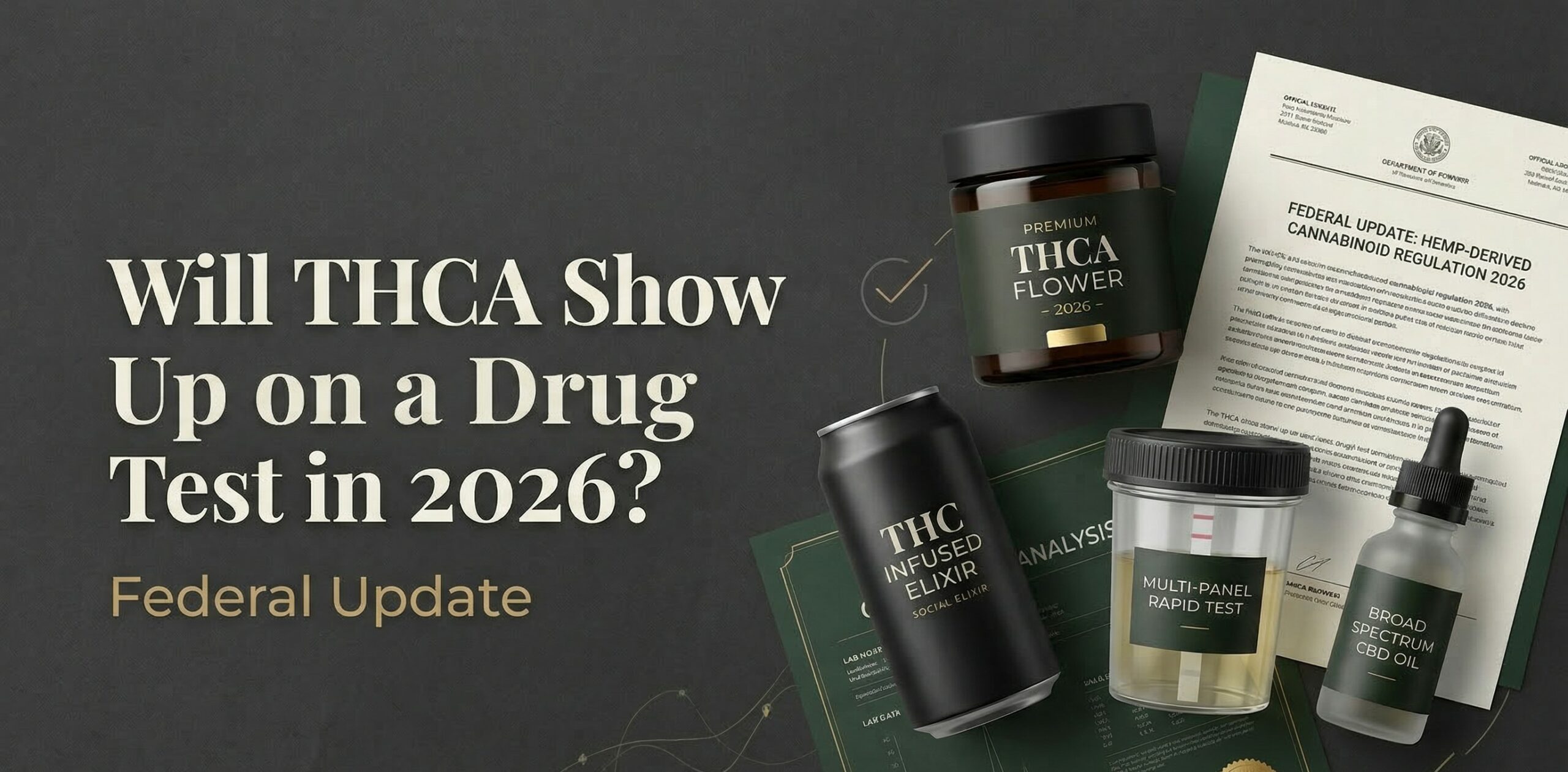
There is a lot of noise around hemp right now. People see headlines about rescheduling, THCA, “legal hemp THC,” and new state crackdowns, then they end up with the same basic question: does any of this change drug-test risk right now?
For most buyers, that is the part that matters most. Not the headline. Not the argument online. Just the real-world answer.
And right now, the clearest answer is this: the March 2026 federal update did not change the current federal workplace drug-testing panels. So if you are shopping for CBD products, looking at THCA flower, comparing Delta-8 products, or thinking about trying a THC drink, you should not treat “hemp” as the same thing as “safe for a drug test.”
This guide keeps it simple. No panic. No hype. Just what adults should understand before buying.
Adults 21+ only. Follow local laws. This guide is for general education only and is not medical, legal, or employment advice.
What actually happened in March 2026?
A new round of confusion started when the federal government published its annual workplace drug-testing notice in March 2026. A lot of people read the update as if federal testing rules had suddenly changed. That is not what happened.
What the notice really confirmed was much more boring, but also much more important: the current authorized drug-testing panels and report language remain in effect.
In other words, if you were already treating THC exposure seriously because of work, licensing, probation, athletics, or other testing rules, that was still the smart move before this notice, and it is still the smart move after it.
That also matches the current DOT position. For safety-sensitive transportation jobs, the testing process does not change just because people are talking about rescheduling. So if your job falls under those rules, you should assume the old “I thought hemp was different” argument will not protect you.
The biggest mistake buyers still make
The most common mistake is very simple: people look at the word hemp and assume it means low risk.
Sometimes that assumption comes from the label. Sometimes it comes from a friend. Sometimes it comes from the idea that CBD is not what tests are looking for, so anything sold in the hemp world must be fine. That is where people get caught off guard.
Most standard drug-test worries are really about THC exposure, not whether the package says hemp, cannabis, CBD, or something in between. Product type matters. The actual cannabinoids in the batch matter. Frequency matters. And the lab report matters more than the marketing line on the front of the package.
Simple rule: if passing a THC drug test matters to you, do not assume a hemp product is low risk until you have checked the exact product type and the batch-specific COA.
How this applies to the main product types people buy
1) CBD tinctures
CBD tinctures do not all carry the same risk. That is where a lot of shoppers oversimplify things.
If a tincture is full spectrum, it can include THC by design. That does not automatically mean a person will fail a drug test, but it does mean the risk is real, especially with repeated use over time. If a tincture is broad spectrum or isolate, risk may be lower, but lower is not the same as zero.
If this is the category you are shopping, read CBD Tincture Drug Test Guide: Full Spectrum vs Isolate first, then compare current options in the CBD Oil Tinctures collection.
That is a much better path than buying a strong tincture first and asking questions later.
2) CBD gummies and edibles
People often assume gummies are gentler just because they feel more casual. But for drug-test purposes, gummies can still create problems when they contain THC, when batches are not as clean as expected, or when someone stacks multiple products without realizing it.
This is especially important with anything labeled full spectrum, or with shoppers who use edibles regularly because the serving feels small and easy to repeat.
If you want the clearer version of that conversation, start with Will CBD Gummies Make You Fail a Drug Test? and then review CBD Edibles and CBD Gummies: How to Choose the Right One in 2026.
3) THCA flower
THCA is one of the biggest sources of confusion in the market right now. A lot of shoppers hear “THCA is not the same as Delta-9 THC” and stop there. That is not enough.
THCA flower raises questions about lab reports, total THC, shipping risk, state law, and drug testing all at once. It is exactly the kind of category where buyers need to slow down and read before they order.
If you want the shortest version: yes, THCA flower can be a real drug-test risk. Mary Jane already breaks that down in Does THCA Show Up on a Drug Test?. For the broader background, these two guides help a lot:
If you want to understand why lab math and compliance language matter so much here, also read Total THC vs Delta-9 THC. That article is one of the better follow-up reads for anyone who keeps seeing low Delta-9 numbers and assumes that settles the whole question.
4) Delta-8 products
Delta-8 sits in a similar problem area for buyers who care about testing. The format can vary a lot, the state rules can vary a lot, and the feeling some shoppers get from “hemp-derived” wording can create more confidence than the product really deserves.
That does not mean every Delta-8 product is the same. It means shoppers should stop treating the category as automatically easy or test-friendly. If you are comparing options, browse the current Delta-8 THC products with the same mindset you would use anywhere else: check the label, check the cannabinoid breakdown, and check whether the risk makes sense for your situation.
5) THC drinks
THC drinks are growing fast because a lot of adults like the format. The serving feels familiar. The labeling is easier to compare than loose flower. And some people prefer the slower, more intentional feel of sipping a beverage over smoking or vaping.
But none of that makes a THC drink “safe” for a drug test.
In fact, this is one area where buyers sometimes get too comfortable because the can looks simple and the dose looks neat on paper. The real question is not whether the drink looks cleaner than another format. The real question is whether it still introduces THC into your system. If it does, the test-risk conversation is still on the table.
For a grounded breakdown, read THC Drinks vs Alcohol (2026): Effects, Dosing & Safety. If you want a concrete label example, product pages like Blue Raspberry Cannabis-Infused Nano Beverage or Grape THC Drink 30mg can help you see what to check before buying.
Why COAs matter more in 2026
In a loose market, people tend to rely on the front label. In a stricter market, that is not enough.
A batch-specific COA gives you the part the branding cannot: the cannabinoid breakdown tied to that product batch. It helps you see whether a product is full spectrum, whether THC is present, whether numbers match the label, and whether the product fits your comfort level.
If you are buying anything in a category that can affect testing, the COA is not just a bonus. It is part of basic shopping hygiene.
This matters even more when you are dealing with rules that increasingly focus on total THC instead of one narrow number. That is one reason Mary Jane has already published guides like The 0.4 mg THC Per Container Rule Explained and Florida Hemp Law Update 2026. Buyers need that extra context now.
Who should be extra careful right now?
Some shoppers can afford a little uncertainty. Some really cannot.
You should be especially careful with hemp-derived cannabinoid products if any of the following apply to you:
- Your job depends on passing a THC drug test
- You work in a safety-sensitive role
- You are in a probation, court, or athletic testing situation
- You cannot afford label mistakes or gray-area products
- You are using multiple cannabinoid products at the same time without tracking total exposure
That does not mean you have to avoid every product forever. It means your shopping standard needs to be stricter than “I saw hemp on the label, so I assumed it was fine.”
What is the safest mindset for buyers in 2026?
The safest mindset is not fear. It is clarity.
Do not buy based on one word. Do not buy based on one comment on social media. Do not buy based on a vague promise like “clean” or “legal in all 50 states.”
Instead, ask a few plain questions:
- What exact category is this product in?
- Does it contain THC, or could it contain THC?
- Is it full spectrum, broad spectrum, or isolate?
- Is there a current COA tied to the batch?
- Does this risk level make sense for my job, schedule, and situation?
That kind of buyer usually avoids the worst mistakes.
Final take
The biggest update from March 2026 is actually a reminder, not a shift: federal workplace drug-testing rules did not suddenly become more relaxed just because the hemp and cannabis conversation keeps moving.
So if you are buying CBD, THCA, Delta-8, or THC drinks, the smart approach is still the same. Read the category. Check the batch. Respect the difference between marketing and chemistry. And if testing matters in your life, do not gamble on assumptions.
If you want a simple place to start, browse CBD Products Guide 2026, compare the current CBD tinctures, or explore Mary Jane’s education-first guides on THCA drug-test risk, THCA basics, and THC drinks before you buy.
FAQ
Did federal drug-testing rules change in March 2026?
No. The March 2026 federal notice kept the current authorized testing panels and report language in place.
Can CBD make you fail a drug test?
CBD itself is not usually what standard THC tests are looking for, but some CBD products can still create risk when they contain THC or when batches are not as clean as expected.
Is full-spectrum CBD higher risk than isolate for drug testing?
In general, yes. Full-spectrum products can include THC by design, while isolate products are typically the simplest CBD-only option. Even then, zero-risk promises should be treated carefully.
Can THCA flower show up on a drug test?
Yes. If drug testing matters to you, THCA flower should be treated as a real THC-test risk.
Are THC drinks safer than other THC products for passing a drug test?
No format should be assumed safe just because it feels lighter, cleaner, or easier to dose. If the product introduces THC, the drug-test conversation still matters.
What should I check before ordering online?
Check your destination rules, the exact product type, the current COA, the cannabinoid breakdown, and whether the risk level makes sense for your own situation.