

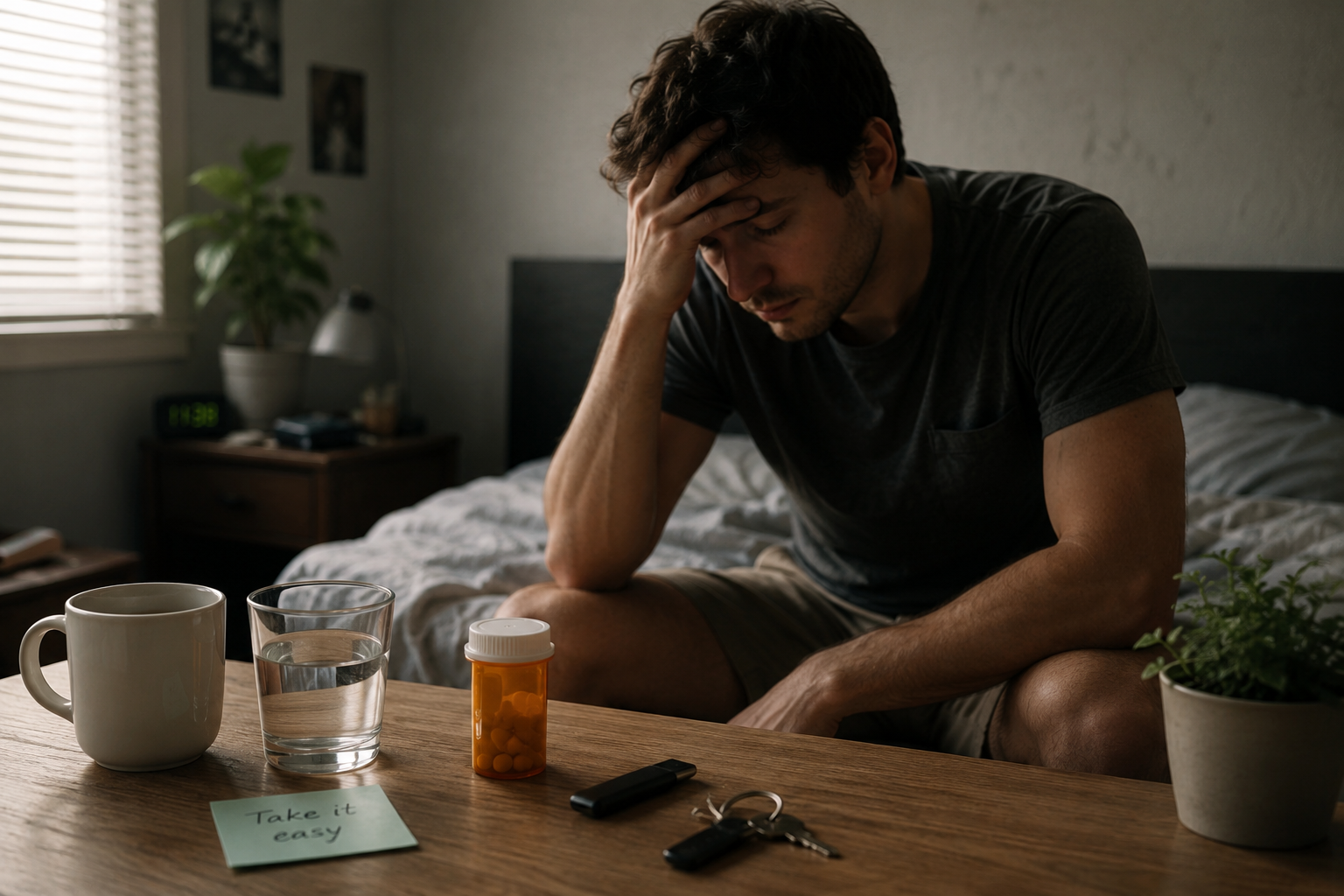
Weed Hangover: Why You Feel Tired, Foggy, or Still High the Next Day
A “weed hangover” is an informal name for tiredness, brain fog, dry mouth, headache, mild nausea, or feeling off after cannabis use. Sometimes the person is not hungover at all—the effects of THC may still be active, especially after a late or high-dose edible. If you still feel high, dizzy, slow, or impaired, do not drive or do safety-sensitive work.
Quick answer
There is no proven instant cure for a weed hangover. Rest, eat normally, drink according to thirst, avoid more THC and alcohol, and allow time for the effects to pass. Coffee or a shower may make you feel more awake, but neither one ends impairment. Get medical help when symptoms are severe, worsening, or unusually persistent.
Common report
Brain fog
Slow thinking, poor focus, fatigue, or a groggy morning.
Common situation
Late edible
Delayed effects and early redosing can carry into the morning.
Safety rule
Do not drive
Wait until you feel fully clear, alert, steady, and unimpaired.
People use “weed hangover” to describe several different experiences. One person may wake up tired after sleeping poorly. Another may have a dry mouth and headache. Someone who ate a strong gummy late at night may still feel intoxicated. Those situations overlap, but they do not always have the same cause or require the same response.
Research has not established one universal cannabis-hangover syndrome. People do report next-day symptoms, but studies of measurable next-day impairment have produced mixed results. The practical rule is simpler: how you feel matters. If you still feel altered or impaired, treat the effects as active.
Adult-use and safety note: This guide is educational and is not medical advice, legal advice, or emergency care. Keep all cannabis and THC products away from children and pets. If a child consumes a cannabis product, contact Poison Control promptly at 1-800-222-1222 in the United States; call emergency services for severe symptoms.
What is a weed hangover?
A weed hangover is an informal term for next-day symptoms reported after cannabis or THC use. Common descriptions include fatigue, brain fog, heavy or dry eyes, dry mouth, headache, mild nausea, low energy, and difficulty concentrating. Not everyone experiences these effects, and the same symptoms can have other causes, including poor sleep, alcohol, illness, medication, anxiety, or cannabis withdrawal in frequent users.
The evidence is limited. A systematic review of next-day cannabis effects found that most higher-quality studies did not show clear next-day impairment, while some lower-quality studies did. That does not mean a person’s symptoms are imaginary. It means “weed hangover” is a useful everyday description, not a precise diagnosis with one established cause or cure.
Weed hangover or still high the next day?
This distinction matters. Feeling tired after the high has ended is different from waking up with altered perception, slow reactions, poor coordination, or clear intoxication. Edibles, drinks, tinctures, high doses, stacked servings, and late-night use can make active effects last longer than expected.
| What you notice | What it may mean | Safest next step |
|---|---|---|
| Altered perception, slow reactions, poor balance, or obvious impairment | THC effects may still be active | Do not drive; wait until fully clear |
| Tired, foggy, dry, or mildly headachy without feeling intoxicated | Reported next-day effects, poor sleep, or another cause | Rest, eat, drink normally, and monitor |
| Panic, sweating, dizziness, severe nausea, or distress soon after THC | Possible acute overconsumption | Stay somewhere calm; get help if severe |
| Repeated vomiting or recurring episodes after frequent cannabis use | Not a routine hangover; CHS is one possibility | Seek medical assessment |
If you are actively too high rather than simply tired, use the immediate safety steps in our guide on what to do when you feel too high. For expected timing by product format, see how long a weed high can last.
Possible weed hangover symptoms
Reported symptoms vary from person to person. They may include:
- Fatigue, sleepiness, or low energy
- Brain fog, poor concentration, or slow thinking
- Dry mouth or dry eyes
- Headache
- Mild nausea or reduced appetite
- Dizziness or feeling unsteady
- Anxiety, irritability, or regret after taking too much
- Lingering intoxication after a strong or late dose
Dry mouth is not proof that cannabis dehydrated you. Water may make your mouth feel better, but it does not remove THC or show that impairment has ended. Likewise, a headache or tiredness the next morning does not prove cannabis is the only cause.
How long does a weed hangover last?
There is no reliable universal timeline. Mild symptoms may improve over several hours, while stronger or later doses can affect more of the day. Product type, total THC, timing, tolerance, sleep, food, medications, alcohol, and individual response all matter.
Do not use a clock alone to decide whether it is safe to drive. The CDC’s cannabis and driving guidance says the safest choice for someone intending to drive is not to use cannabis or other impairing substances. If you wake up slow, dizzy, altered, or unfocused, arrange another ride or wait.
Why edibles and gummies can affect the next day
Edibles create a common timing problem: the first serving may not feel strong right away, so a person takes another. The effects can then build together later. The CDC notes that edible effects may take 30 minutes to two hours to appear and can last longer than expected, depending on the amount, food, medications, alcohol, and other factors.
| Stage | What can happen | What to remember |
|---|---|---|
| Early wait | The edible may seem weak before the full effect develops. | Do not assume “nothing is happening” and immediately take more. |
| Later peak | Stacked servings may feel much stronger than expected. | Package size and serving size are not always the same. |
| Overnight | A high or residual effects may continue during sleep. | Late use leaves less time before morning responsibilities. |
| Next day | Some people wake up impaired, foggy, tired, or dizzy. | Do not drive while effects remain. |
Health Canada’s consumer guidance says ingested effects can last up to 12 hours and some residual effects could last up to 24 hours. Those are outer guidance ranges, not promises that everyone will feel normal at a certain hour. Symptoms lasting longer than expected, or symptoms that are severe or worsening, deserve professional advice.
Can Delta-8, Delta-9, drinks, vapes, or flower cause next-day effects?
Any intoxicating THC product may contribute to a rough morning when the dose, timing, or individual response produces effects that last longer than planned. “Delta-8 hangover” and “Delta-9 hangover” are informal phrases, not separate medical diagnoses.
| Product type | Common next-day setup | Mistake to avoid |
|---|---|---|
| Gummies and edibles | Delayed onset, long duration, or stacked servings | Redosing before the first serving develops |
| THC drinks | Sipping without tracking total milligrams | Treating the entire container as one serving |
| Vapes and carts | Repeated inhalations late at night | Taking multiple hits before judging the effect |
| Flower and pre-rolls | High potency, heavy use, or poor sleep | Assuming every product or session has the same strength |
| Tinctures | Misreading the dropper or label | Confusing milligrams per serving with milligrams per bottle |
What about a Delta-8 hangover?
Delta-8 products can be intoxicating. A person may report tiredness, fog, dizziness, or a lingering altered feeling the next day, especially after a strong edible, multiple servings, late use, or combining substances. Do not assume Delta-8 guarantees a milder morning. Product strength, label accuracy, formulation, tolerance, and individual response can vary.
Our Delta-8 versus Delta-9 guide explains the broader differences. For drinks, see the comparison of THC drinks and alcohol.
What to do when you wake up foggy
- Stop and assess. Ask whether you are simply tired or still feel altered, dizzy, unsteady, or slow.
- Do not drive. Avoid driving, machinery, heights, childcare, cooking over an open flame, or other safety-sensitive tasks while impaired.
- Avoid adding substances. Do not use more THC to “balance out” the feeling, and avoid alcohol.
- Eat if comfortable. A normal or light meal may be easier if you feel nauseated.
- Drink according to thirst. Water may help dry-mouth discomfort, but it is not a THC antidote.
- Rest and give it time. Keep the day simple until you feel fully clear.
- Ask for help. If you are alone and distressed, contact someone you trust. Seek professional care for concerning symptoms.
Coffee and showers do not make you sober
Coffee may make you feel more awake and a shower may feel refreshing, but neither removes THC or proves that your reaction time and judgment are normal. Caffeine can also worsen anxiety or jitteriness for some people.
When is it more than a routine weed hangover?
Get urgent medical help for trouble breathing, chest pain, fainting, seizure, inability to wake, severe agitation, hallucinations, extreme confusion, or repeated vomiting. Vomiting that keeps returning—especially in someone who uses cannabis frequently—should not be dismissed as a normal hangover.
If a child consumed a gummy, drink, baked edible, or another cannabis product, contact Poison Control even if the child initially seems fine. Children can develop marked sleepiness, vomiting, dizziness, difficulty walking, confusion, abnormal heart rate, or breathing problems after edible exposure. See the Poison Control guidance for accidental edible ingestion.
Also speak with a healthcare professional if next-day symptoms happen regularly, interfere with work or school, continue longer than expected, or make it difficult to reduce cannabis use.
How to reduce the chance of next-day THC effects
- Read the label before using an edible, drink, or tincture.
- Check milligrams per serving and servings per container.
- Avoid guessing the strength of an unfamiliar product.
- Do not redose simply because an edible has not worked quickly.
- Avoid high-dose or unfamiliar THC products before an early morning.
- Do not mix cannabis with alcohol or other impairing substances.
- Choose a lower amount when you are new, sensitive, or trying a different format.
- Store gummies, drinks, and other edibles in child-resistant packaging, away from ordinary food.
- If next-day symptoms keep happening, reduce or stop use and discuss the pattern with a healthcare professional.
For a closer look at smaller serving sizes, read our comparison of 2.5 mg versus 5 mg THC. No amount is guaranteed to affect everyone the same way.
Frequently asked questions
Can weed give you a hangover?
Some people report fatigue, brain fog, dry mouth, headache, mild nausea, or low energy after cannabis use. Research has not established one universal weed-hangover syndrome, and similar symptoms can have other causes.
Why do I still feel high the next day?
The effects may be lasting longer than expected, particularly after a late, strong, or repeatedly dosed edible. Do not drive or perform safety-sensitive work until you feel fully clear and unimpaired.
How long does an edible hangover last?
There is no exact timeline. Ingested effects can last longer than inhaled effects, and some residual effects may continue into the next day. Dose, timing, formulation, tolerance, food, alcohol, medications, and individual response all influence duration.
How do I get rid of weed-hangover brain fog?
There is no proven immediate cure. Rest, eat normally, drink according to thirst, avoid more THC and alcohol, and wait until you feel clear. Seek medical advice if the fog is severe, worsening, or unusually persistent.
Can Delta-8 make you tired the next day?
It can be associated with reported next-day tiredness or fog, particularly when an intoxicating product is strong, used late, or redosed. “Delta-8 hangover” is an informal term, and product effects vary.
Does water flush THC out faster?
No. Ordinary hydration may relieve thirst or dry mouth, but drinking extra water does not instantly remove THC or end impairment.
Can I drive after sleeping?
Sleep alone is not proof that impairment has ended. Do not drive if you still feel high, slow, dizzy, foggy, unsteady, or unable to focus normally.
When should I call Poison Control?
Call for accidental ingestion, uncertainty about the amount consumed, or concerning exposure symptoms. In the United States, Poison Control is available at 1-800-222-1222. Call emergency services for severe or life-threatening symptoms.
Choose products with tomorrow in mind
A rough morning often starts with a late dose, an unfamiliar product, serving-size confusion, or redosing before the first serving develops. The most useful prevention steps are simple: read the label, track the amount, avoid mixing substances, and leave enough time before driving or important responsibilities.
Adults in Miami who want help comparing product formats and reading serving information can visit Mary Jane’s Bakery Co in Miami or browse available products online. Store staff can explain labels and product formats but cannot provide medical advice or predict how a product will affect an individual.